
AdBlue Warning Light On? What It Means and What We Check First
An AdBlue warning light does not always mean you just need a top-up. Here is what the SCR system does, what can actually go wrong, and why we investigate before recommending anything.
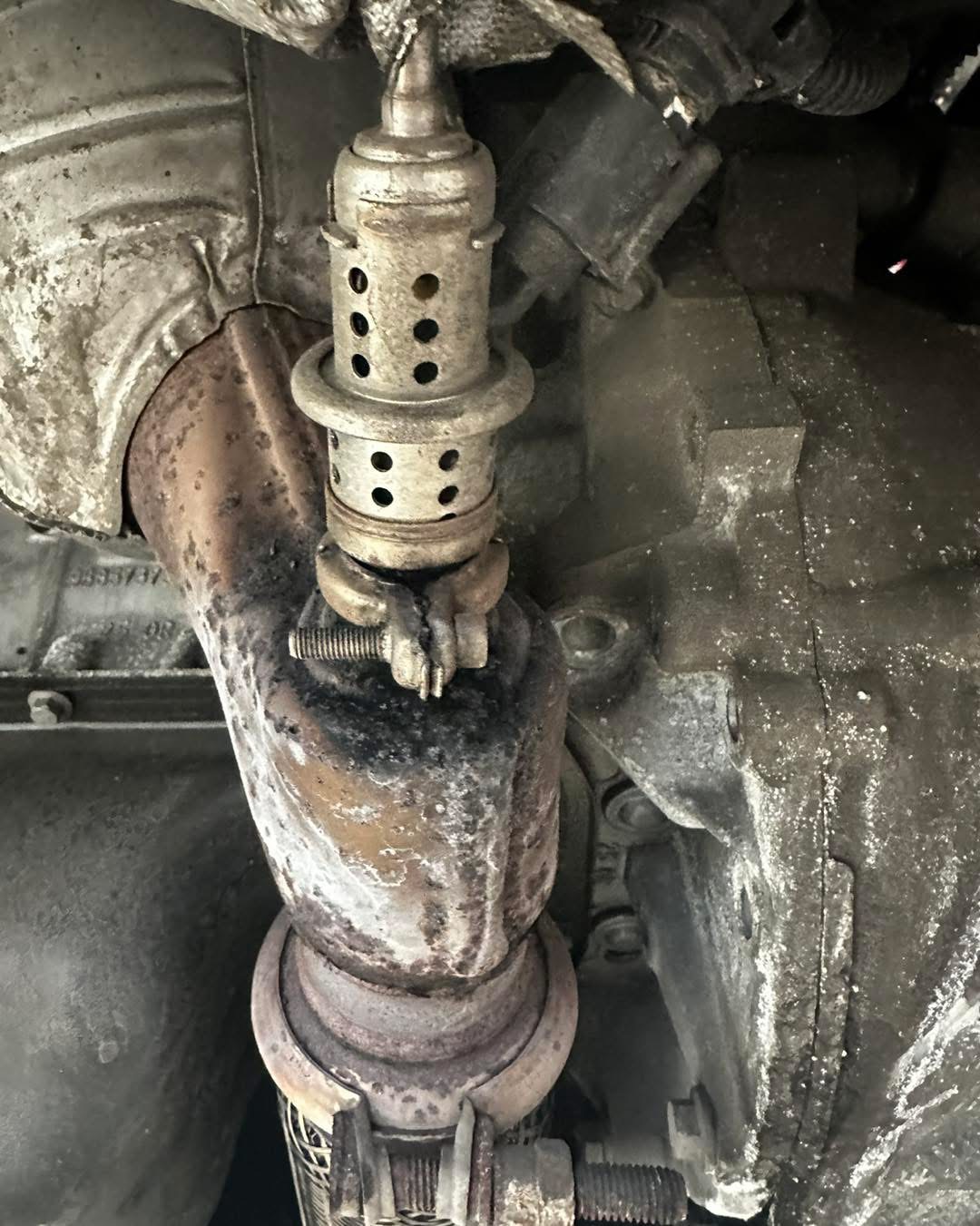
An AdBlue warning light comes on and the obvious answer seems clear. Top it up and carry on.
Sometimes that is exactly right. A low AdBlue level is a straightforward fix. But an AdBlue warning that indicates a system fault is a different situation, and adding fluid to it does not solve the underlying problem.
Here is what the system actually does, what the different warning stages mean, and how we approach these faults at Shaw’s.
What AdBlue actually does
AdBlue is a diesel exhaust fluid — a urea solution stored in its own dedicated tank, separate from the fuel. It is used by the SCR system (Selective Catalytic Reduction), which is fitted to most diesel cars and vans built since around 2015 as part of meeting Euro 6 emissions standards.
As exhaust gases pass through the SCR catalyst, AdBlue is injected into them. The reaction converts harmful nitrogen oxide (NOx) emissions into nitrogen and water vapour, significantly reducing what leaves the exhaust.
The AdBlue filler is usually blue and clearly labelled. It does not mix with diesel — it goes into its own system entirely.
What the different warning stages mean
Most diesel vehicles have several stages of AdBlue warning:
- First warning: Level is getting low. Top up soon — you still have reasonable range before it becomes critical.
- Second warning: Level is critically low. Top up before you stop the engine.
- Final warning: If the engine is switched off now, the vehicle may not restart until the tank is refilled.
Those three stages are about fluid level. Topping up resolves them.
There is a different category of warning — a fault light, check engine light, or emissions warning that appears alongside AdBlue-related information. That warning is telling you something is wrong with the SCR system itself.
Topping up the tank does not fix a system fault.
What can go wrong beyond low fluid
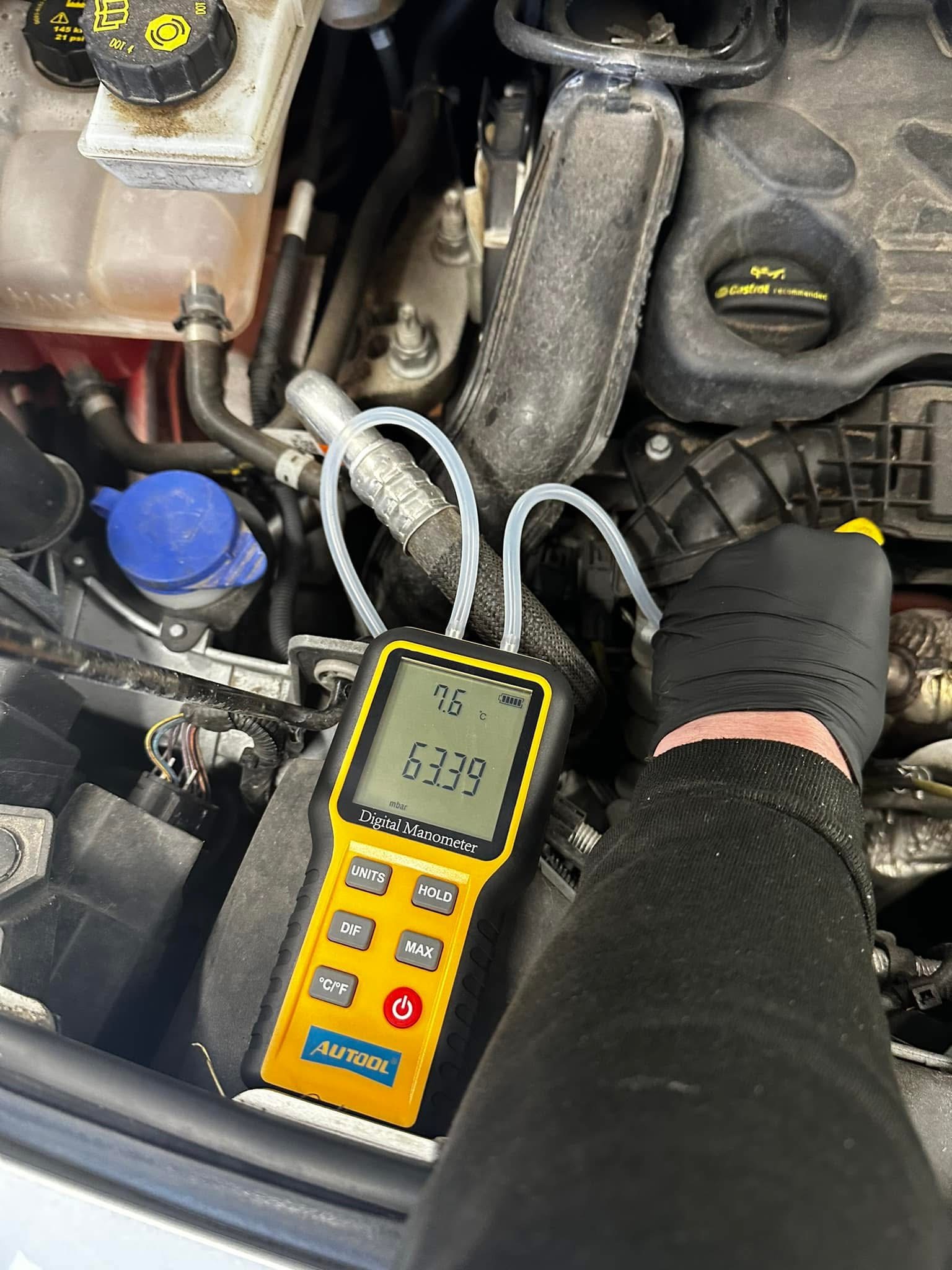
Diagnostic assessment of a diesel emissions fault at Shaw’s Rhyl workshop — the starting point before recommending any work.
The SCR system has several components that can develop faults independently of the fluid level:
- AdBlue injector — injects fluid into the exhaust stream. Can become blocked or fail mechanically.
- AdBlue pump — moves fluid from the tank to the injector. Can fail electrically or mechanically.
- NOx sensors — measure nitrogen oxide levels before and after the catalyst. A sensor failure can generate warning lights even when the rest of the system is operating correctly.
- Quality or level sensor — monitors the concentration and level of AdBlue in the tank. Can produce incorrect readings.
- SCR catalyst — can deteriorate over time or become contaminated.
- Fluid contamination — using the wrong fluid, or contaminating the AdBlue tank with diesel or water, can damage the pump, injector and catalyst, sometimes seriously.
A fault warning needs investigating. The investigation tells us which part of the system is causing the problem and what needs to be done about it.
EGR faults — the related diesel warning
EGR stands for Exhaust Gas Recirculation. The EGR valve routes a portion of the exhaust gases back into the engine’s intake, which reduces combustion temperatures and cuts NOx output — a different approach to the same emissions problem that AdBlue addresses.
Over time, EGR valves and their associated passages can accumulate heavy carbon deposits. The valve can stick open, stick closed or stop operating correctly. The results are often rough idling, reduced power, increased fuel consumption and a check engine or emissions warning light.
EGR and AdBlue are separate systems. But both are common sources of diesel emissions warning lights, and both can contribute to or follow on from DPF problems. We wrote separately about how we approach DPF warning lights and why we do not simply force a regeneration without first understanding why the filter became blocked.
Why these warnings should not be ignored
The AdBlue warning stages are not arbitrary — they are built into the vehicle specifically to prevent it operating without a functioning emissions system. Ignoring early warnings means reaching a point where the engine will not restart. That is not a fault; it is the protection working as intended.
An active SCR system fault left running can cause the vehicle to enter limp mode, restricting power until the fault is addressed. A blocked injector left untreated can also contaminate the SCR catalyst, turning a relatively straightforward repair into a more expensive one.
How we approach it at Shaw’s
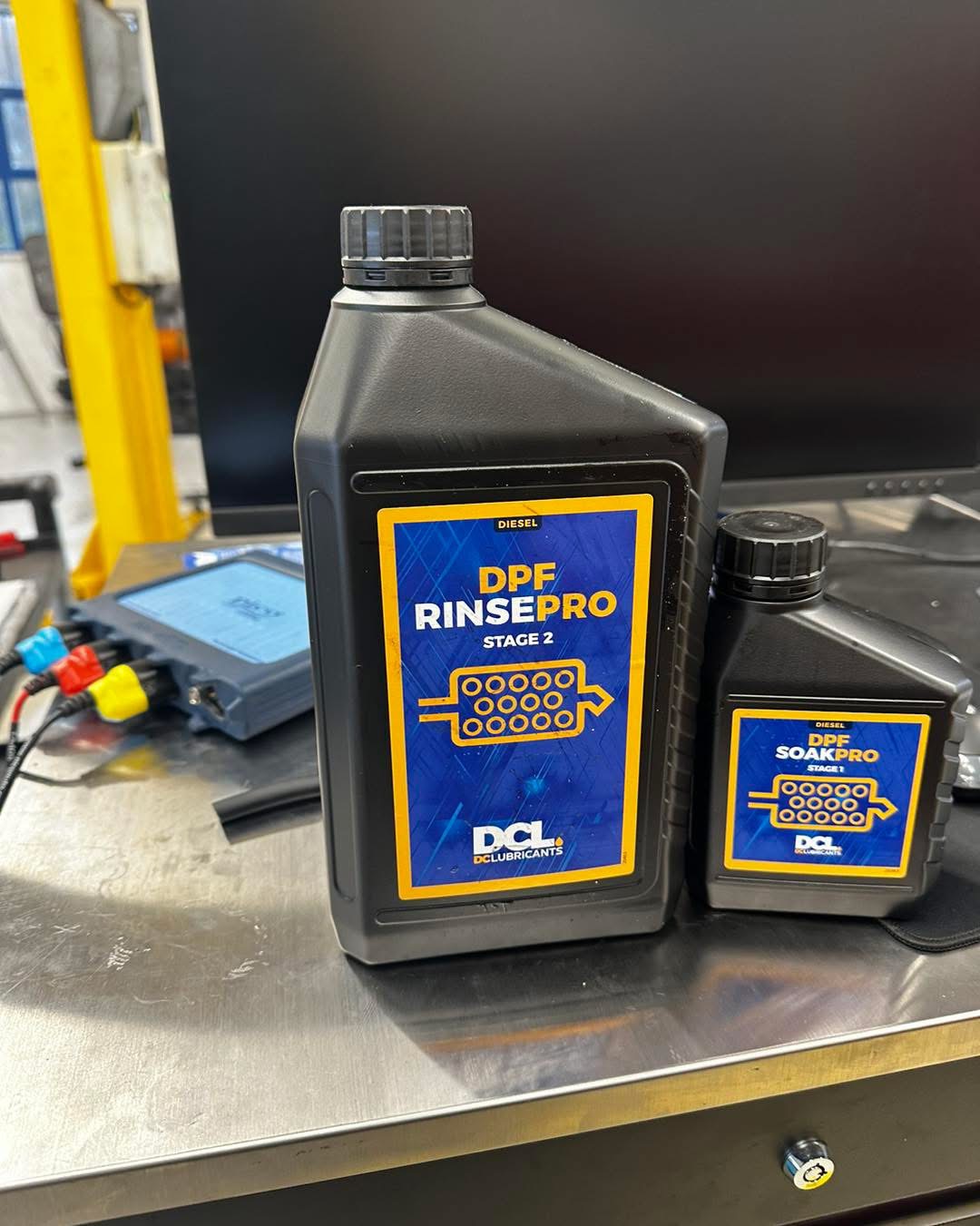
Specialist diesel emissions equipment at Shaw’s Rhyl, used across DPF, AdBlue and EGR investigations.
AdBlue, EGR and DPF investigation is carried out at our Rhyl branch.
Our starting point is a diagnostic assessment. That tells us what the vehicle is actually doing, what fault data is stored, and where the problem genuinely lies — not just what the warning light suggests on the surface.
If the issue is low fluid, that is confirmed and resolved. If the diagnostic reveals a fault within the SCR system — a failed injector, a damaged sensor, a contamination problem — we explain what we found and what we recommend before any repair work is authorised.
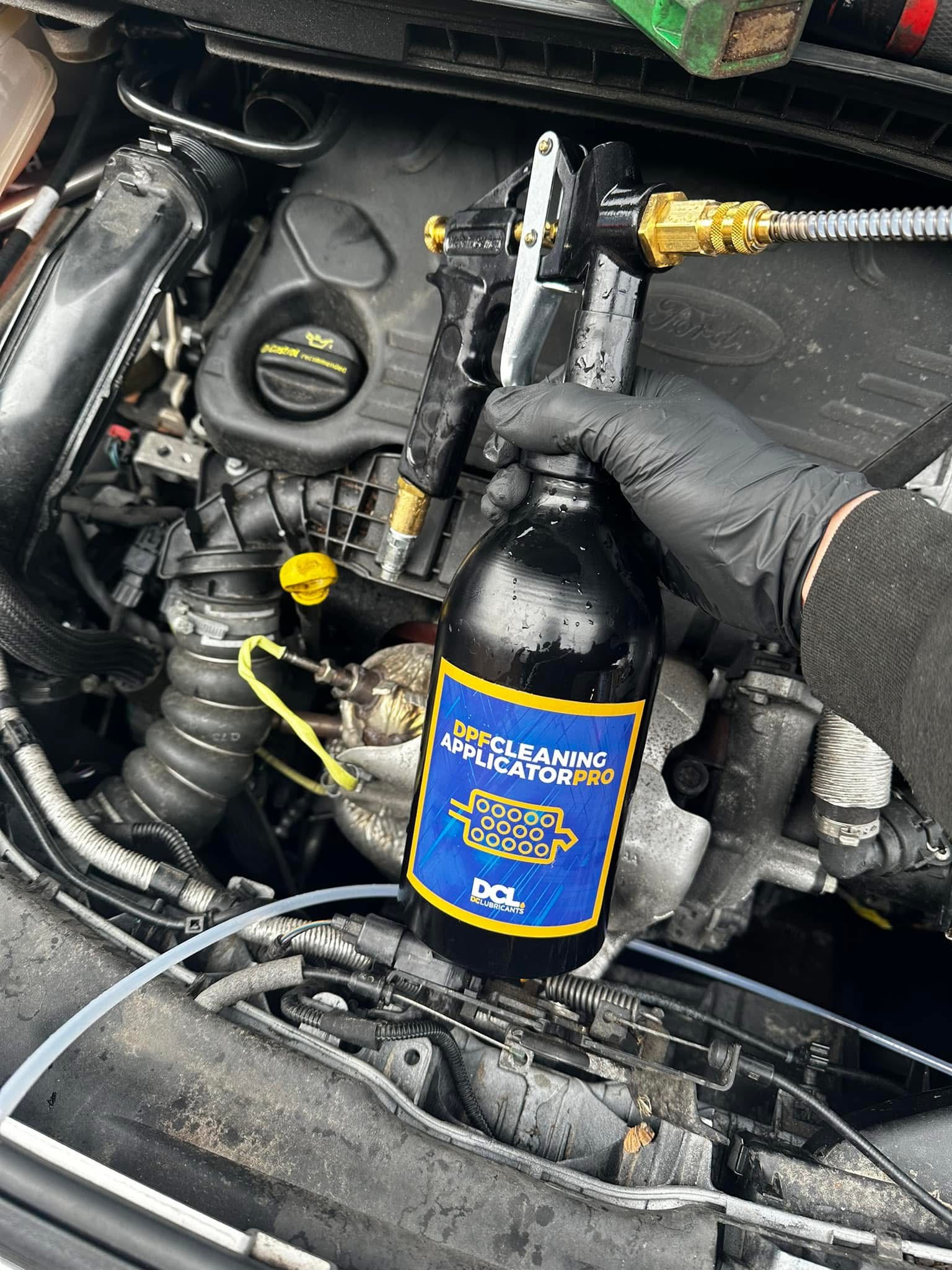
Diesel emissions system work at Shaw’s Rhyl — assess what is happening, then advise.
The diagnostic assessment is £150. Repair work required following the assessment is quoted separately and approved by you before we start.
Book a diesel emissions assessment at Shaw’s
If you have an AdBlue warning light, an EML, or you are concerned about your diesel’s emissions system, the right first step is finding out what is actually happening.
AdBlue, EGR and DPF investigation is handled at our Rhyl branch.
Find out more about engine diagnostics and diesel emissions at Shaw’s →
Questions we get asked
Can I drive with an AdBlue warning light on?
In the early stages, yes. The warning gives you time to top up before the level becomes critical. Once the final warning appears, you should top up before switching off the engine — otherwise the vehicle may not restart. If the light indicates a system fault rather than low level, get it investigated without delay, as continued driving with an active fault can cause further damage.
Is AdBlue the same as engine oil or fuel?
No. AdBlue is completely separate — it has its own tank, its own filler cap (usually blue and clearly marked), and must not be mixed with diesel or any other fluid. Adding diesel into the AdBlue tank is one of the most common causes of serious SCR system damage and is expensive to put right.
My car did not use AdBlue a few years ago — when did it become standard?
Most diesel cars built from around 2015 onwards use AdBlue as part of meeting Euro 6 emissions standards. Vehicles registered before that may not have an SCR system at all. If your diesel was registered from 2015 onwards, it is worth checking — some manufacturers are clearer about this than others in their handbooks.
Can Shaw’s look at an EGR fault at the same time as an AdBlue issue?
Yes. The diagnostic assessment at Rhyl covers the vehicle’s fault data across the emissions system, so if there are multiple related warnings or faults, we can investigate them together and give you a clear picture of what is happening.
We check it properly.
We explain it properly.
We do the job properly.
You decide what gets done.
Shaw’s Service Station
Rhyl
01745 353481