
Why Does My Car Air Con Smell? What We See in the Workshop
That musty hit when you switch the air con on is almost always bacteria and mould sitting on the evaporator. Here is what we find when we look, and what we do about it.
Switch the air con on and get a musty, damp smell coming through the vents. It might happen first thing on a cold morning when the demist kicks in. It might have been building gradually over the summer. It might have hit you for the first time this week now the weather has turned.
It is one of the most common things we hear at this time of year.
The smell is almost always bacteria and mould growing on the evaporator — the component inside your dashboard that chills the air before it reaches the cabin. It is not dangerous, it is not a sign of a serious fault, and it is fixable. But it does not go away on its own.
Where the smell actually comes from
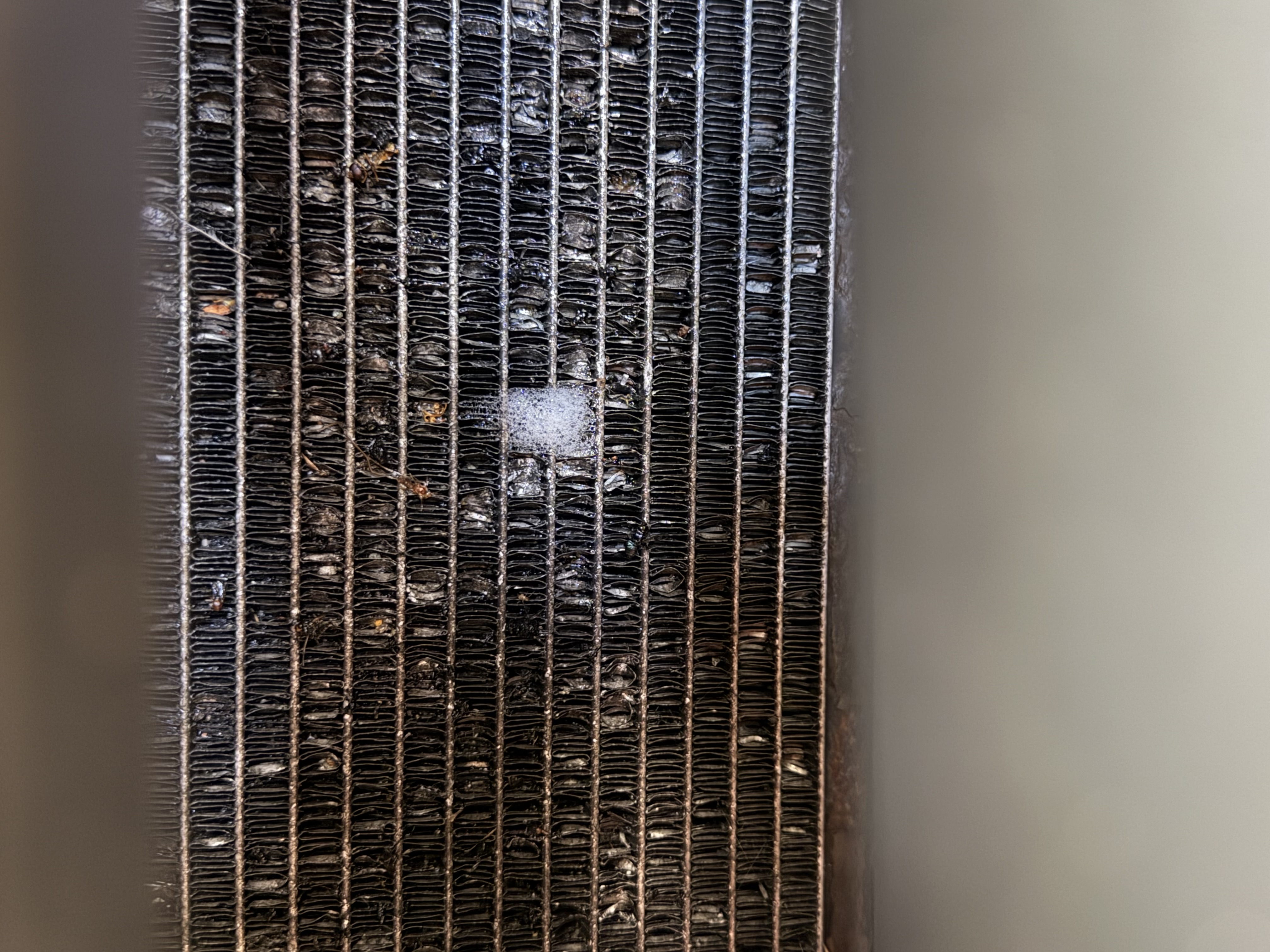
What builds up on an evaporator over time — dirt, debris and the damp conditions that allow bacteria to grow.
The evaporator sits behind your dashboard, inside the ventilation system. Every time the air con runs, refrigerant flows through it and gets very cold. Warm air from outside passes across those cold fins, the heat is removed, and cooler air comes through your vents.
That process also produces condensation. The evaporator gets cold and damp, then warms up again when the engine stops. Over time, in that warm and humid environment, bacteria and mould take hold in the fins and the surrounding housing.
When the fan runs, it pushes air through the evaporator — and that air carries the smell of whatever is growing there into the cabin.
Leaves, dust and debris drawn in through the ventilation intake add to it. Some vehicles are more prone to it than others depending on where the intake sits and how the system is designed, but no car is completely immune.
The cabin filter makes it worse
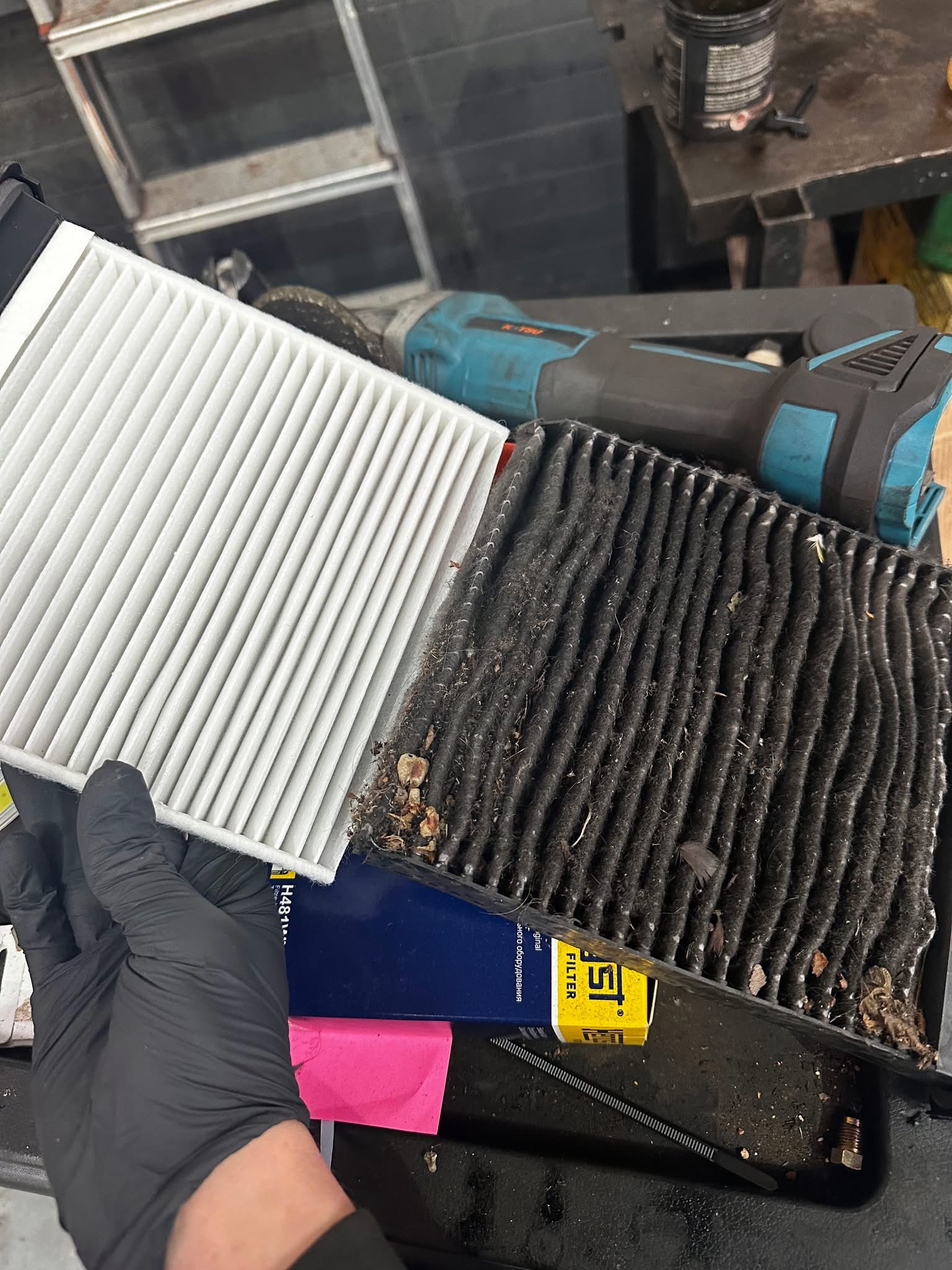
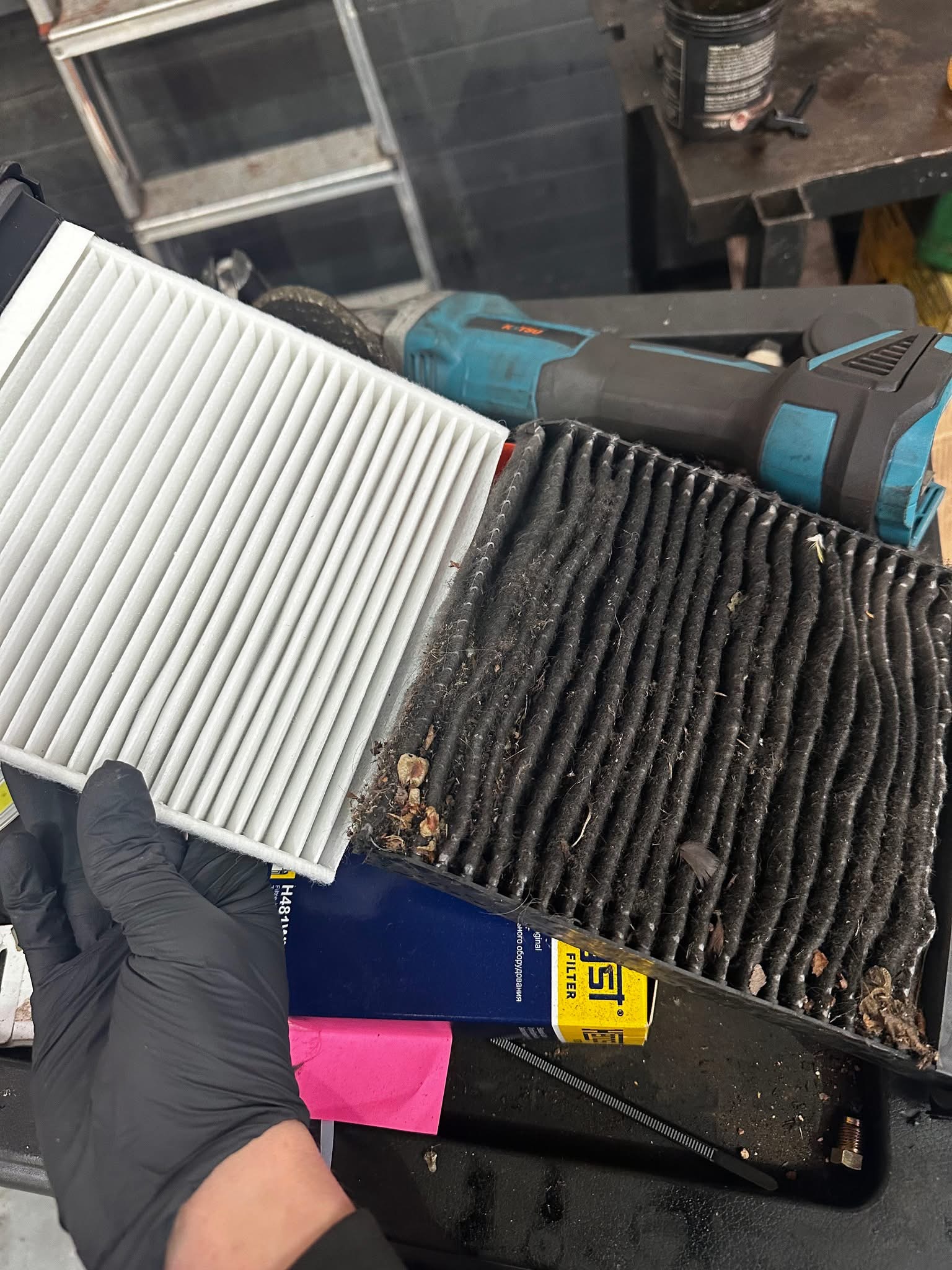
An overdue cabin filter next to a new replacement. A blocked filter restricts airflow and keeps the evaporator damp for longer.
Most vehicles have a cabin filter — sometimes called a pollen filter — sitting in the airflow path before the evaporator. Its job is to catch pollen, dust and debris before they reach the ventilation system and the cabin.
When the filter is overdue for replacement it stops doing that job. Debris gets through to the evaporator. Airflow through the system is restricted. A restricted filter means the evaporator stays damp for longer after the engine stops, which is exactly the wrong condition if you are trying to prevent bacteria from growing.
A blocked cabin filter can contribute to the smell directly and make the evaporator problem worse at the same time.
Why October is often when people first notice it
The air con system runs year-round in most vehicles — managing cabin temperature, preventing windscreen misting, pulling humidity out of the air in winter. The bacteria on the evaporator is usually there through the summer, but it tends to get noticed when the heating or demist goes on properly for the first time as the weather cools.
The system has been cycling through warmth and condensation all summer. If the cabin filter has not been changed in a couple of years, and the evaporator has never been treated, autumn is often the point where the smell becomes hard to ignore.
It is worth dealing with it now rather than spending the winter with every journey starting the same way.
What the AC service at Shaw's involves
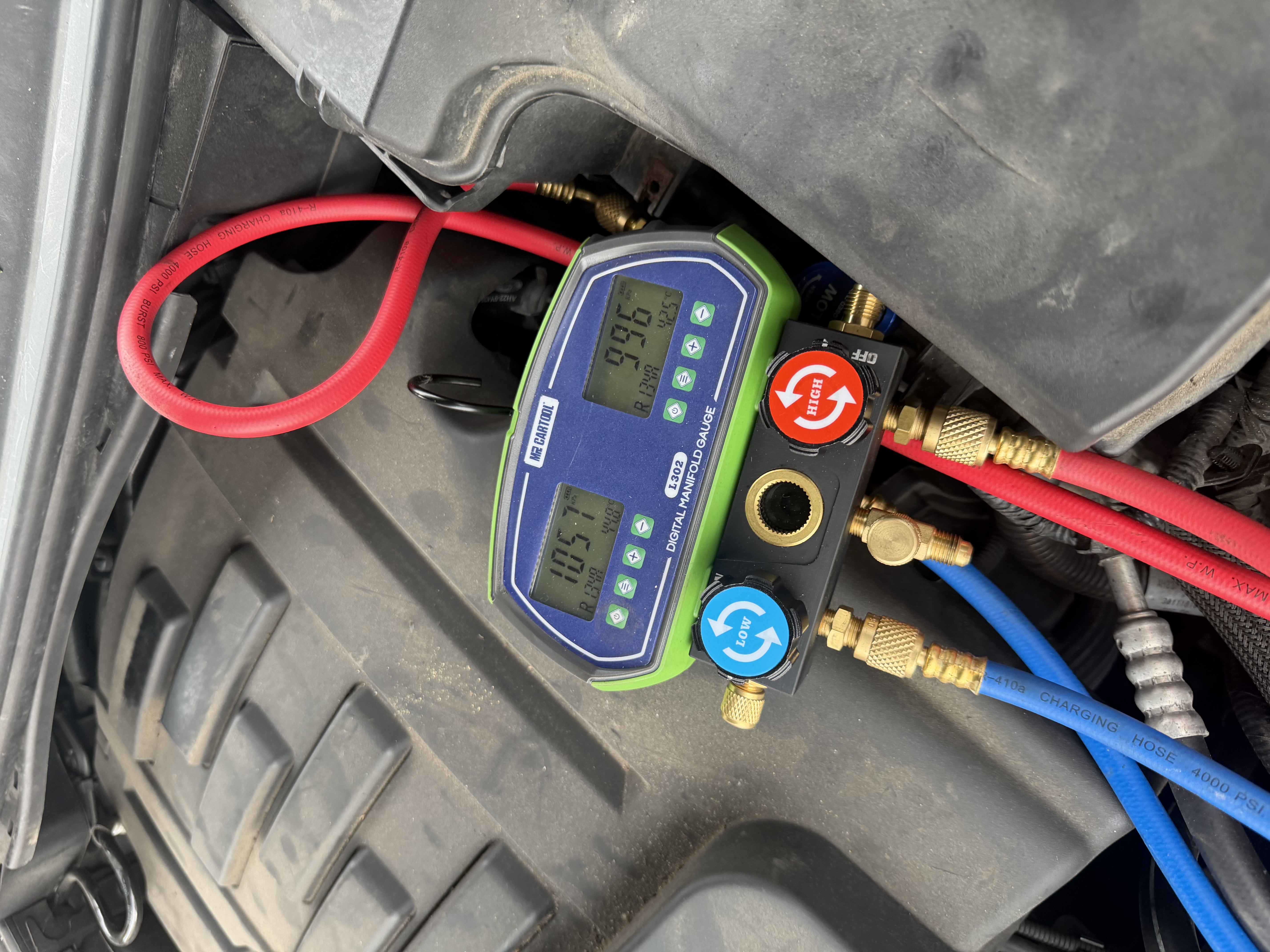
Checking system pressures before proceeding — a regas on a leaking system is not a fix.
Shaw's does not start an AC service by adding refrigerant and hoping for the best. The normal approach is to check the system first.
Where required, a leak or pressure test is carried out before any refrigerant is added. This confirms whether the system is actually holding its charge. If it is not, adding refrigerant is not a solution — it will escape through the same path the last charge took.
If the system passes its pressure checks, the service proceeds: the old refrigerant is recovered, the system is evacuated, and the correct refrigerant is added to the correct specification for the vehicle.
Where the evaporator or cabin filter is the source of the smell, that is dealt with as part of putting the system right — not left until next time.
When the leak check matters most
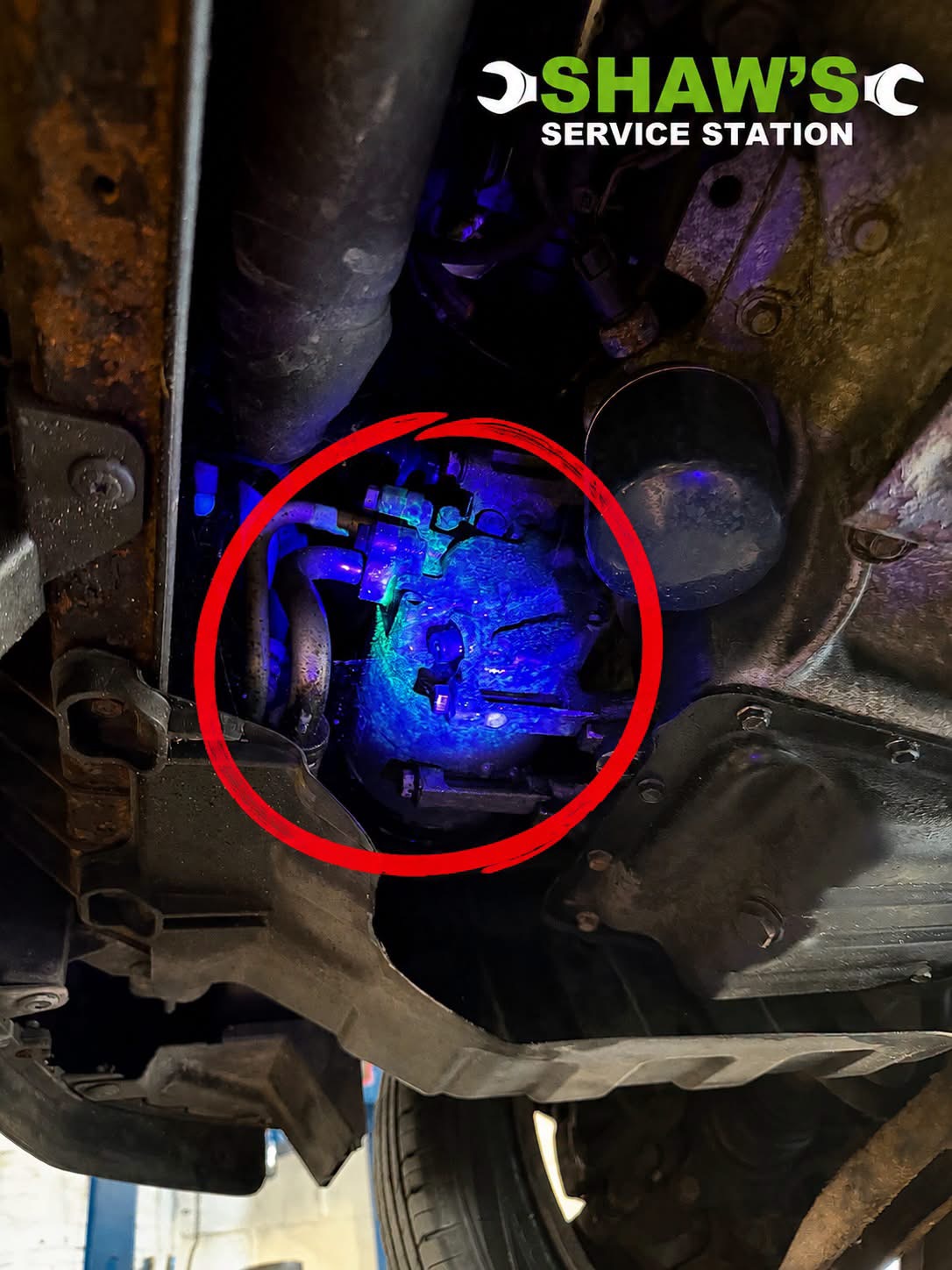
UV dye leak detection used to identify where refrigerant is escaping from the system.
Not every AC system that blows warm has a leak. Sometimes refrigerant has simply dropped over several years of normal use. But some systems lose refrigerant more quickly than that — slowly enough that the cooling declines over one or two seasons rather than stopping suddenly.
A regas on that system will improve the cooling, but the refrigerant will escape again. A pressure or leak test tells us whether the system is actually holding its charge.
Where a leak is slow or not immediately obvious, leaving the vehicle overnight for a pressure test is sometimes the most reliable way to confirm it. An AC leak check or pressure test is £50. That is significantly less than a second regas next year.
Which refrigerant does your car take?
Most cars built before 2017 use R134a refrigerant. Most cars built from 2017 onwards use R1234yf. The two are not interchangeable — they require different equipment and different handling.
Shaw's carries out both:
- R134a regas: £95
- R1234yf regas: £150
Not sure which your car takes? Give us your registration when you book and we will check before you come in.
Both branches — including EV and hybrid
Air conditioning servicing is carried out at both the Kinmel Bay and Rhyl branches. Hybrid and EV compatible air conditioning equipment is available at our Rhyl workshop.
Book an AC service at Shaw's
If the air con smells, the cooling is weaker than it was, or you want it checked before winter, the place to start is a proper look at the system — not a quick top-up and hope.
You can find out more about our air conditioning services and how to book.
Book an AC service at Shaw's →
Questions we get asked
Does a musty smell mean my AC system is leaking refrigerant?
Not usually. The musty smell is almost always bacteria and mould on the evaporator — that is a separate issue from refrigerant level. A system can smell and still blow cold. It can also lose refrigerant without smelling at all. The two are worth investigating separately.
How often should I have my car air con serviced?
Every two years is a commonly quoted interval, and it is a reasonable guide. In practice it depends on how the car is used and how quickly refrigerant drops. If the cooling feels weaker than it was, or the smell has started, those are the signs to act on rather than waiting for a calendar date.
Can I just replace the cabin filter and fix the smell?
A new cabin filter will help, and it is worth doing if yours is overdue. But if the smell is already established, the source is usually the evaporator rather than the filter alone. Replacing the filter without treating the evaporator can reduce the smell without solving it.
We check it properly.
We explain it properly.
We do the job properly.
You decide what gets done.
Shaw's Service Station
Kinmel Bay & Rhyl
01745 353481