
What a Worn Clutch Looks Like — And What Else We Found When We Replaced It
Clutch wear happens gradually, and the warning signs are easy to dismiss until the clutch stops working. These are real photographs from a recent clutch replacement at our workshop — including something we found once the gearbox was out.
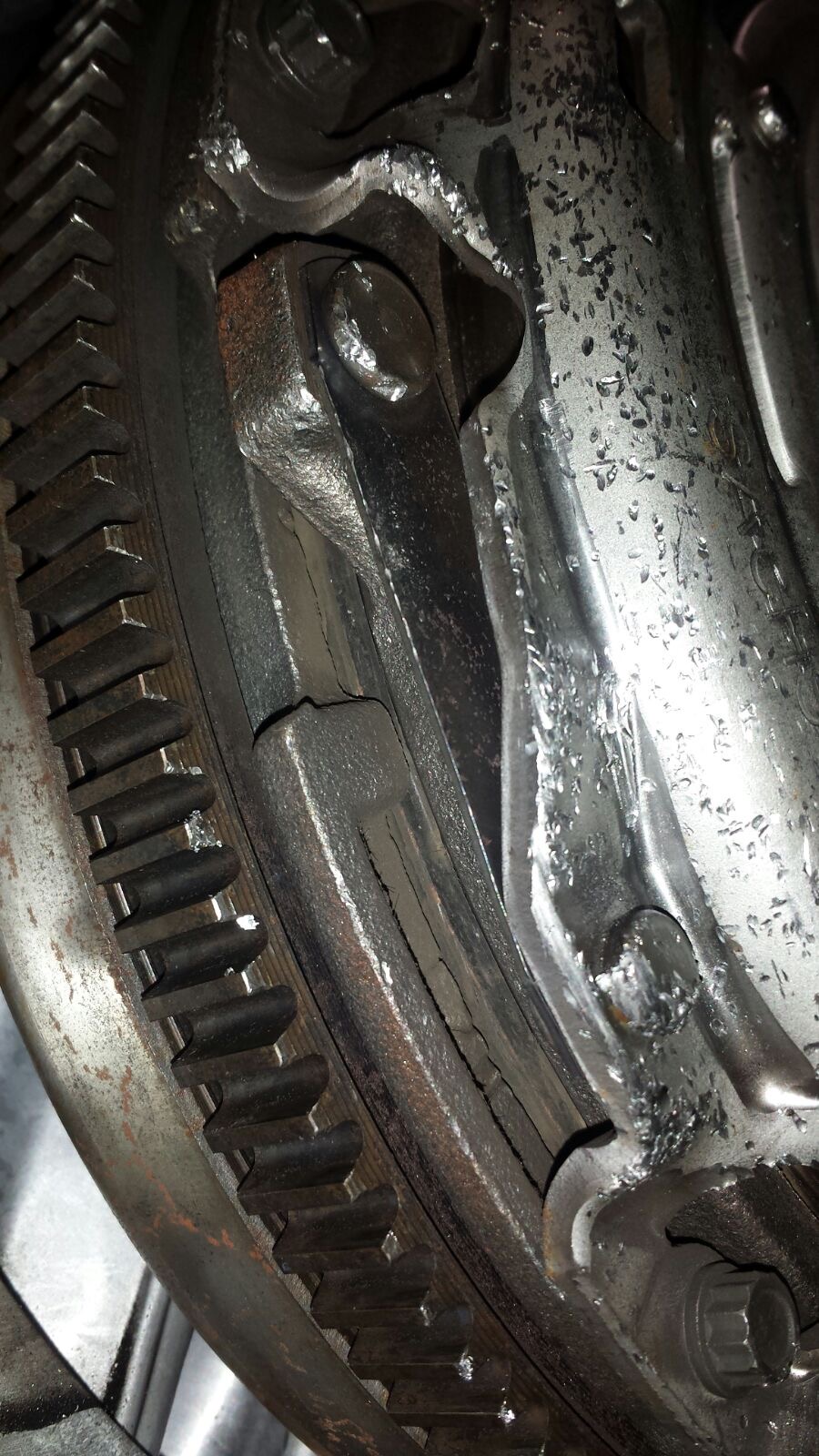
Clutches do not usually fail suddenly. They wear out over time, and the signs build slowly enough that it is easy to dismiss what the vehicle is telling you — until the point where the clutch stops working properly.
The photographs in this article are from a recent clutch replacement at our workshop. They show the old components alongside the replacement — and an additional problem we found once the gearbox was out.
What we removed
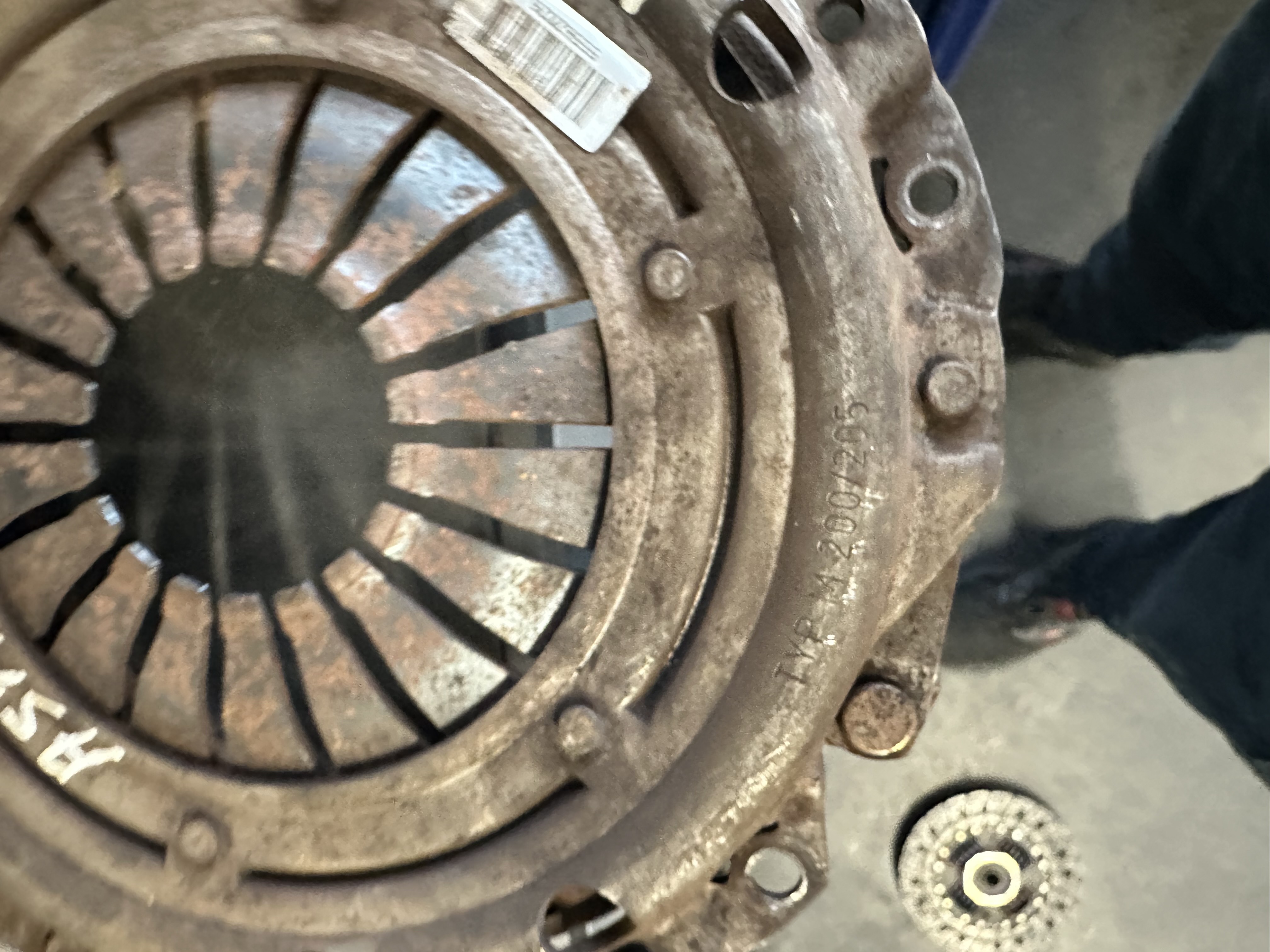
The old pressure plate removed from the vehicle. The diaphragm spring fingers — the radial segments across the centre — show heavy corrosion and surface rust from years of heat, moisture and use.
The pressure plate is the part of the clutch assembly that clamps the clutch disc against the flywheel when the pedal is released, allowing drive to be transmitted from the engine to the gearbox. Press the clutch pedal and it releases that clamping force. Let go of the pedal and it re-engages.
The diaphragm springs — the fingers visible across the centre of the pressure plate — provide that clamping force. Over time, those spring fingers can weaken, corrode and lose their ability to apply consistent pressure. When that happens, the clutch begins to slip: the engine revs rise when you accelerate, but the vehicle does not accelerate in proportion.
The condition visible on this pressure plate — heavy corrosion, pitted and worn spring finger surfaces — tells you this is a clutch that had done its job for a significant number of miles and years. It was no longer working reliably.
What went back in
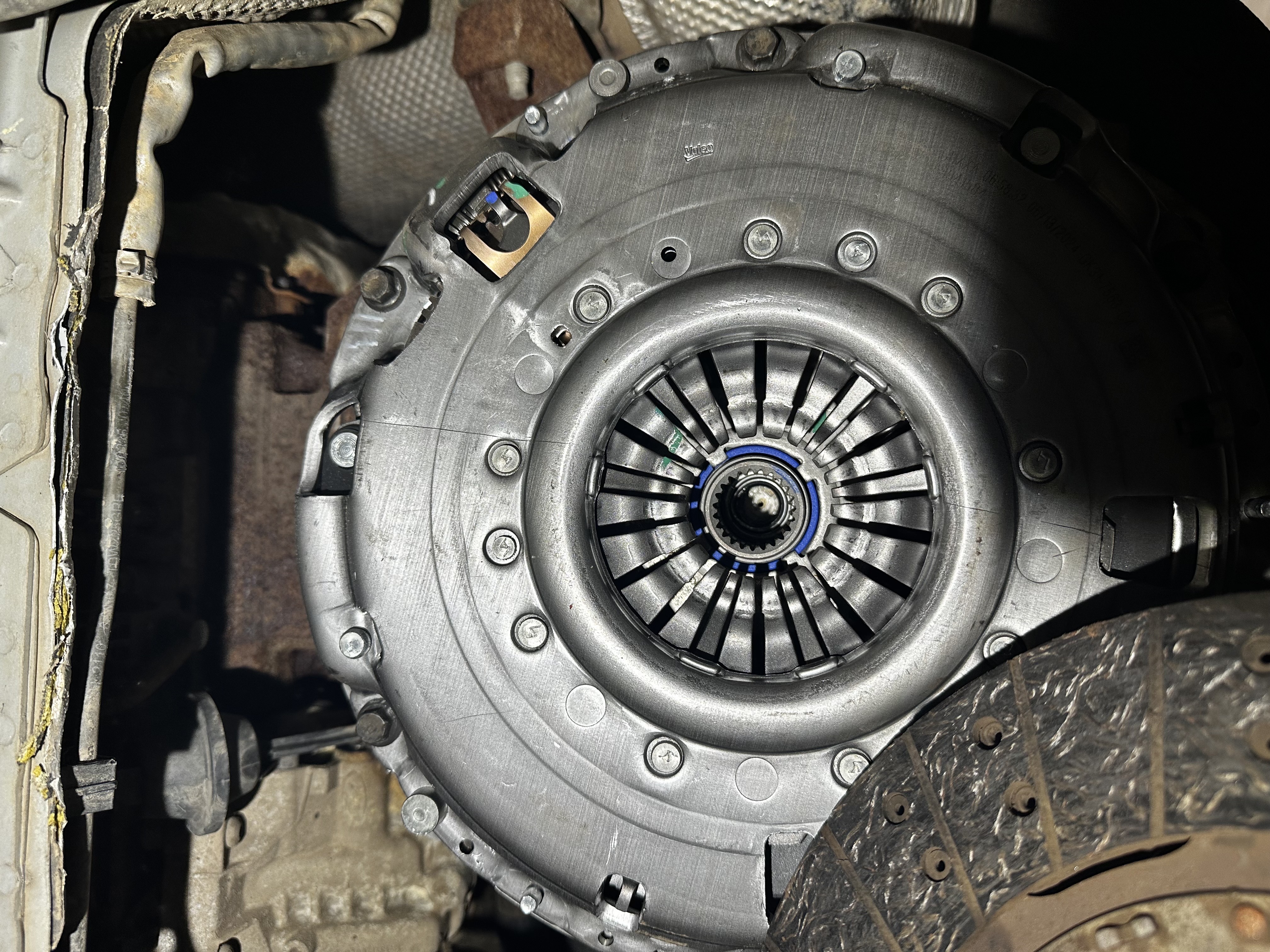
The replacement clutch in position — new pressure plate with fresh diaphragm springs, and a new clutch disc with unworn friction material.
A clutch replacement normally involves replacing the pressure plate and the clutch disc together.
There is a straightforward reason for this: once the gearbox is removed to access the clutch, the additional cost of fitting a new disc alongside the new pressure plate is small compared to the cost of doing the job twice. Fitting a new pressure plate to an old disc — or vice versa — means the components bed in against each other unevenly and the job is likely to be repeated sooner than it should be.
The flywheel surface is also inspected at this stage. If the clutch has been slipping for any length of time, the friction material on the disc can glaze or score the flywheel face, which then needs machining or replacement to give the new clutch a proper surface to work against.
What else we found once it was apart
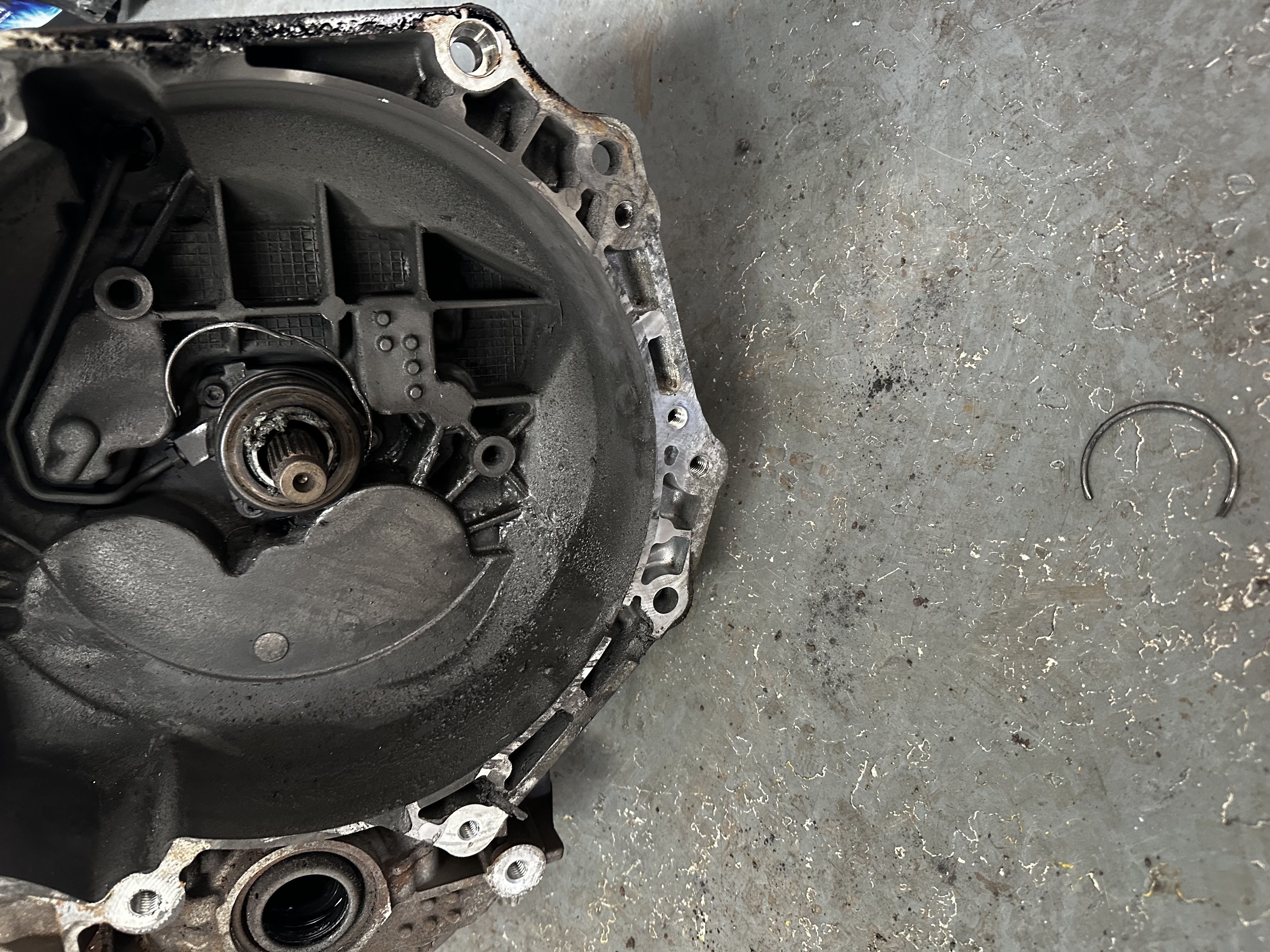
Inside the bell housing — a broken snap ring on the floor and the release bearing visible on the input shaft. The snap ring had failed before the gearbox came out. Finding it in pieces is not a planned part of a straightforward clutch replacement.
Once the gearbox was out, we found a broken snap ring from the release bearing assembly on the floor of the bell housing.
A snap ring is a small retaining clip that holds a component in position on a shaft — in this case, part of the release bearing assembly on the gearbox input shaft. When it fails, the component it is retaining loses its secure location. Finding one in pieces on the floor is confirmation it had already failed before the gearbox was removed — something that would not have been visible or diagnosable without stripping the assembly down.
This is a common kind of additional finding on clutch jobs. A component has failed inside the bell housing, invisible until the gearbox is out. The correct approach is to stop, explain the finding to the customer, and agree on the next step before continuing. The snap ring was replaced as part of this job.
It is also a good example of why proper access matters. A clutch that is replaced without the additional finding being addressed would have the same problem continuing inside a freshly rebuilt assembly.
Signs your clutch may be wearing
Every clutch wears at a different rate depending on the vehicle, usage, mileage and how it is driven. There is no universal replacement interval. But there are signs worth paying attention to:
- Slipping — engine revs rise when you accelerate, but the vehicle does not accelerate in proportion. Most noticeable under load: hills, towing, overtaking, or pulling away in a higher gear.
- Biting point creeping higher — the point at which drive engages has moved towards the top of the pedal travel. A biting point that is significantly higher than it used to be is a sign of clutch wear.
- Juddering when pulling away — the clutch is not engaging smoothly from a standstill. Can feel like a shudder or pulsation through the vehicle on take-off.
- Difficulty selecting gears — particularly if gear selection improves with the engine off, which can indicate the clutch is not fully disengaging when the pedal is pressed.
- Heavy or stiff pedal — can point to a problem with the hydraulic clutch system or the release mechanism.
- Burning smell — usually associated with a clutch that has been slipping under sustained load, such as slow traffic or steep hills.
Any of these, particularly a combination, is worth having investigated before the clutch fails completely. A slipping or non-disengaging clutch can also become an MOT concern.
Clutch replacement at Shaw's
Clutch work is carried out at both our Kinmel Bay and Rhyl branches. Because clutch complexity and parts specification vary significantly between vehicles, the correct process is confirmed for the specific vehicle before any work is quoted.
Where we find something additional during the job — as with the snap ring here — we stop, explain what we found, and agree on the next step before continuing. Work is not automatically carried out simply because the vehicle is already stripped down.
Clutch concern? Get in touch with Shaw's →
We check it properly.
We explain it properly.
We do the job properly.
You decide what gets done.
Shaw's Service Station
Kinmel Bay & Rhyl
01745 353481