
TPMS Light On? Why We Don’t Just Replace the Sensor
A low tyre, air leak, incorrect sensor and communication fault can all cause a TPMS warning. Here are some real examples from our workshop.
A tyre pressure warning light looks simple.
There is a warning on the dashboard, so it must need a tyre pressure sensor. Right?
Not necessarily.
We see very different TPMS problems in the workshop, and several of them can result in the driver seeing a similar warning.
We have seen genuine low tyre pressure, punctures, air leaking around the wheel, sensors that are not communicating and faults stored within the TPMS system itself.
Those are very different problems.
That is why we don't start by guessing which sensor to replace.
We start by finding out what is actually happening.
What is TPMS?
TPMS stands for Tyre Pressure Monitoring System.
Its job is to help identify a problem with tyre pressure and alert the driver.
Depending on the vehicle, the system may monitor pressure using individual sensors at the wheels or use information from other vehicle systems to identify a pressure problem.
The important bit for the driver is simpler.
The warning light is an alert. It isn't a diagnosis.
Sometimes the TPMS is doing exactly what it should
Here is a real example from our workshop.
The vehicle's own data showed the right rear tyre reporting only 13.5 psi.
The vehicle was reporting just 13.5 psi from the right rear tyre.
That is very different from a failed sensor.
The system was giving us useful information and alerting the driver to a genuine pressure problem.
The next question isn't:
“How do we turn the light off?”
It's:
“Why has that tyre lost its pressure?”
A low tyre still needs a reason
Simply putting air back into a tyre may make the warning disappear, but it does not explain why the pressure dropped in the first place.
Sometimes the reason is obvious.
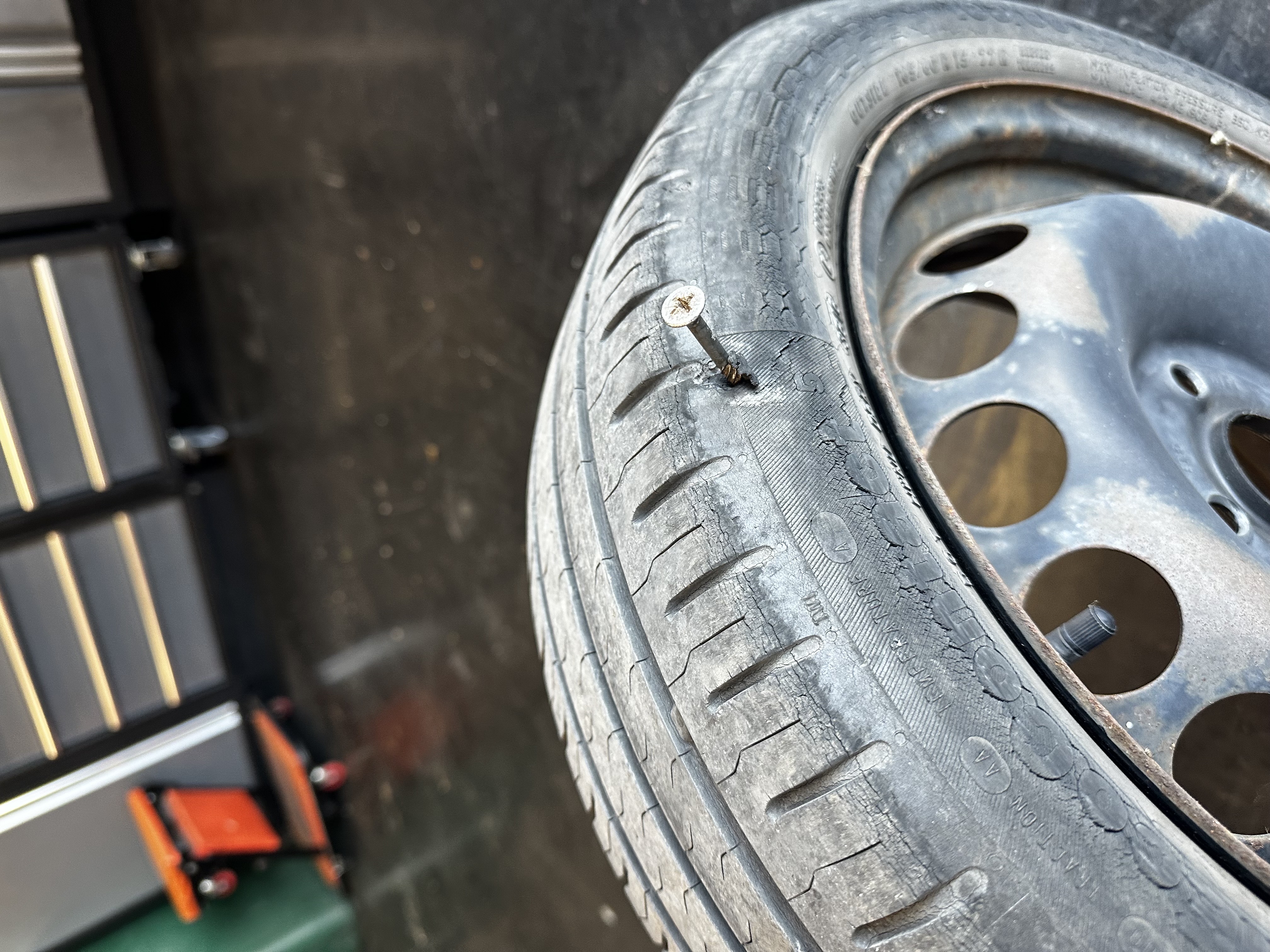
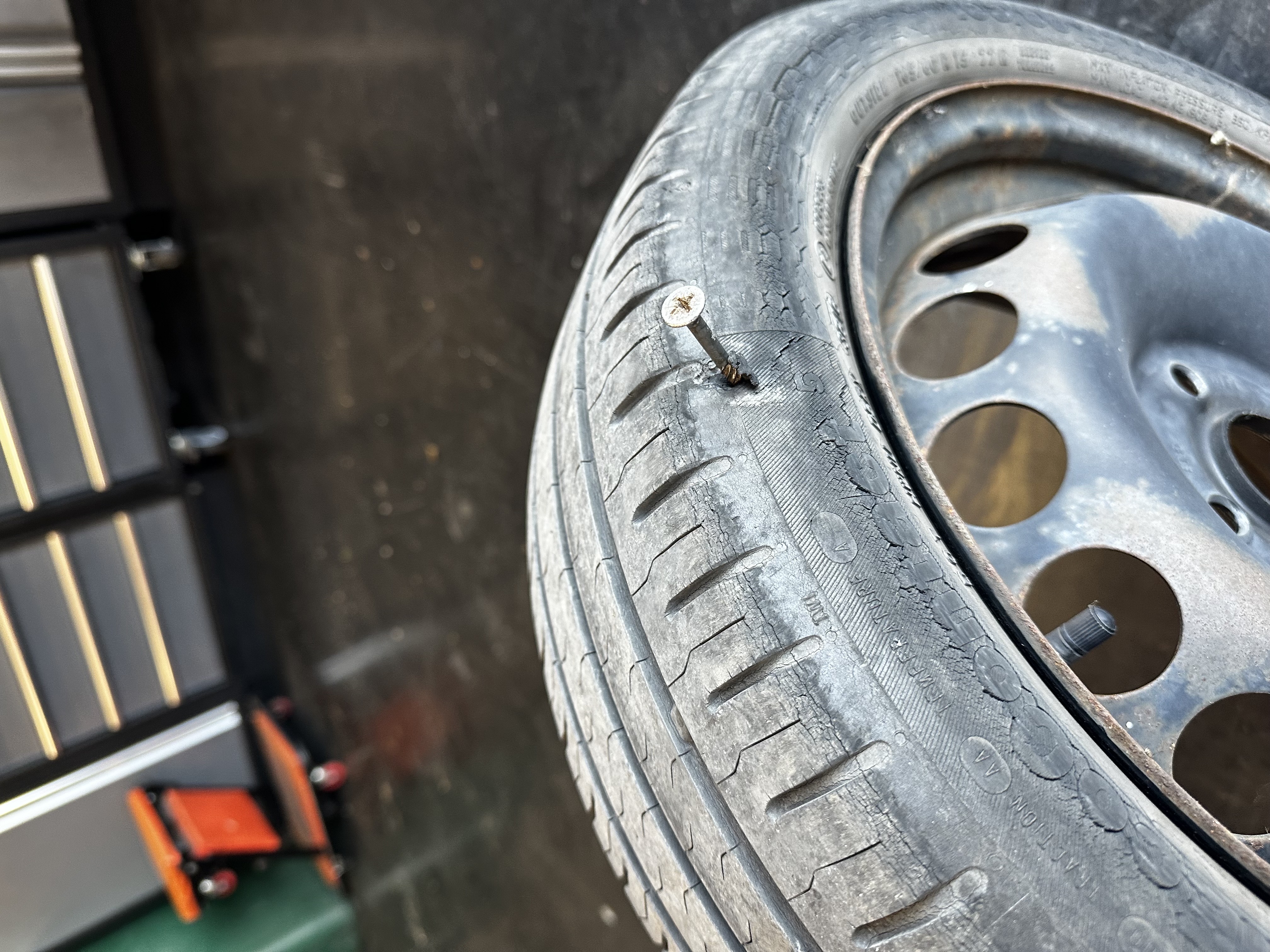
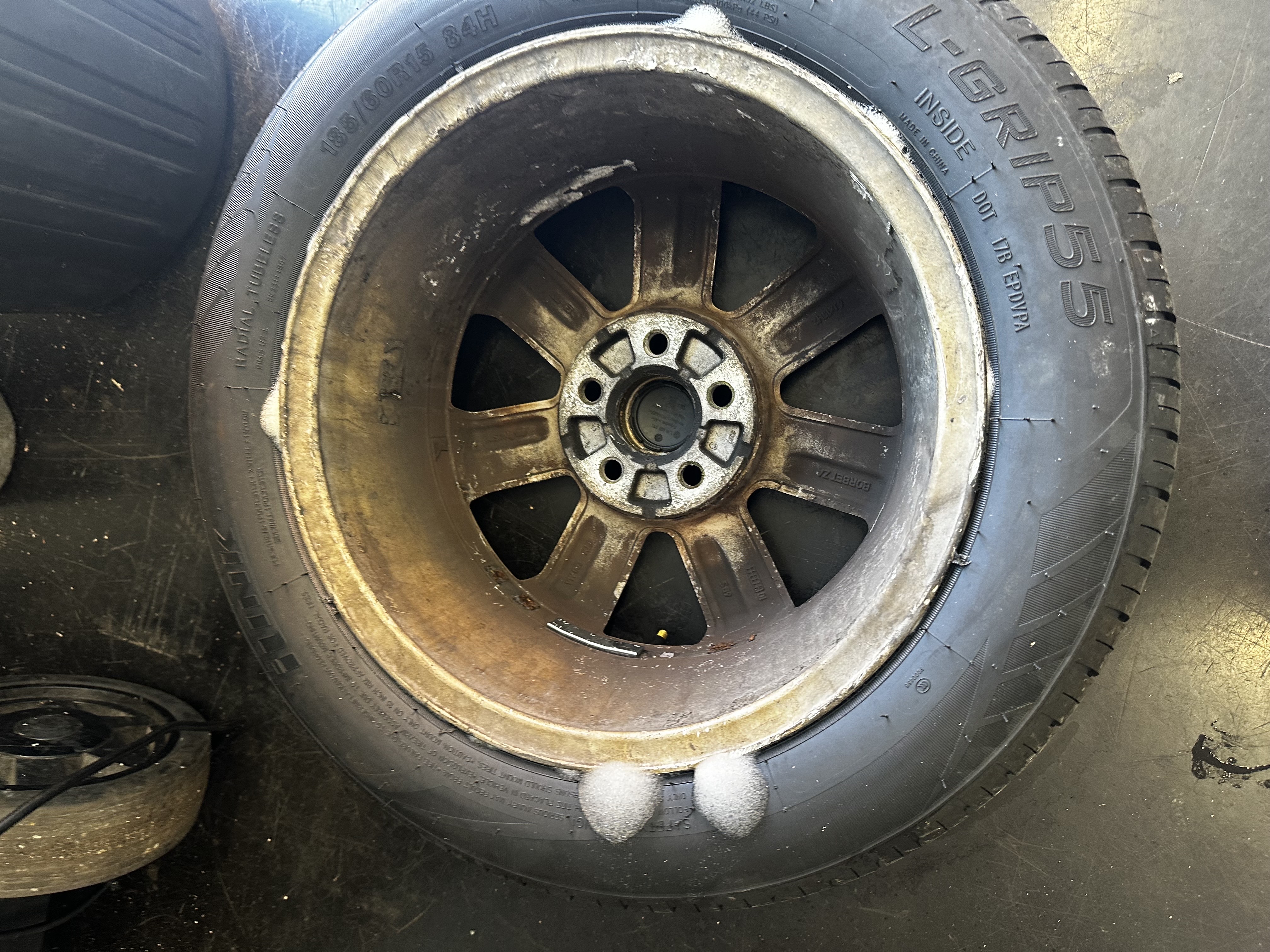
This tyre had a visible screw puncture. Resetting the TPMS warning would not repair the problem.
Other pressure losses can be less obvious.
Air escaping around the tyre and wheel sealing area during testing.
This is why the physical tyre, valve and wheel still matter.
Electronics cannot fix an air leak.
We can check what the vehicle actually knows
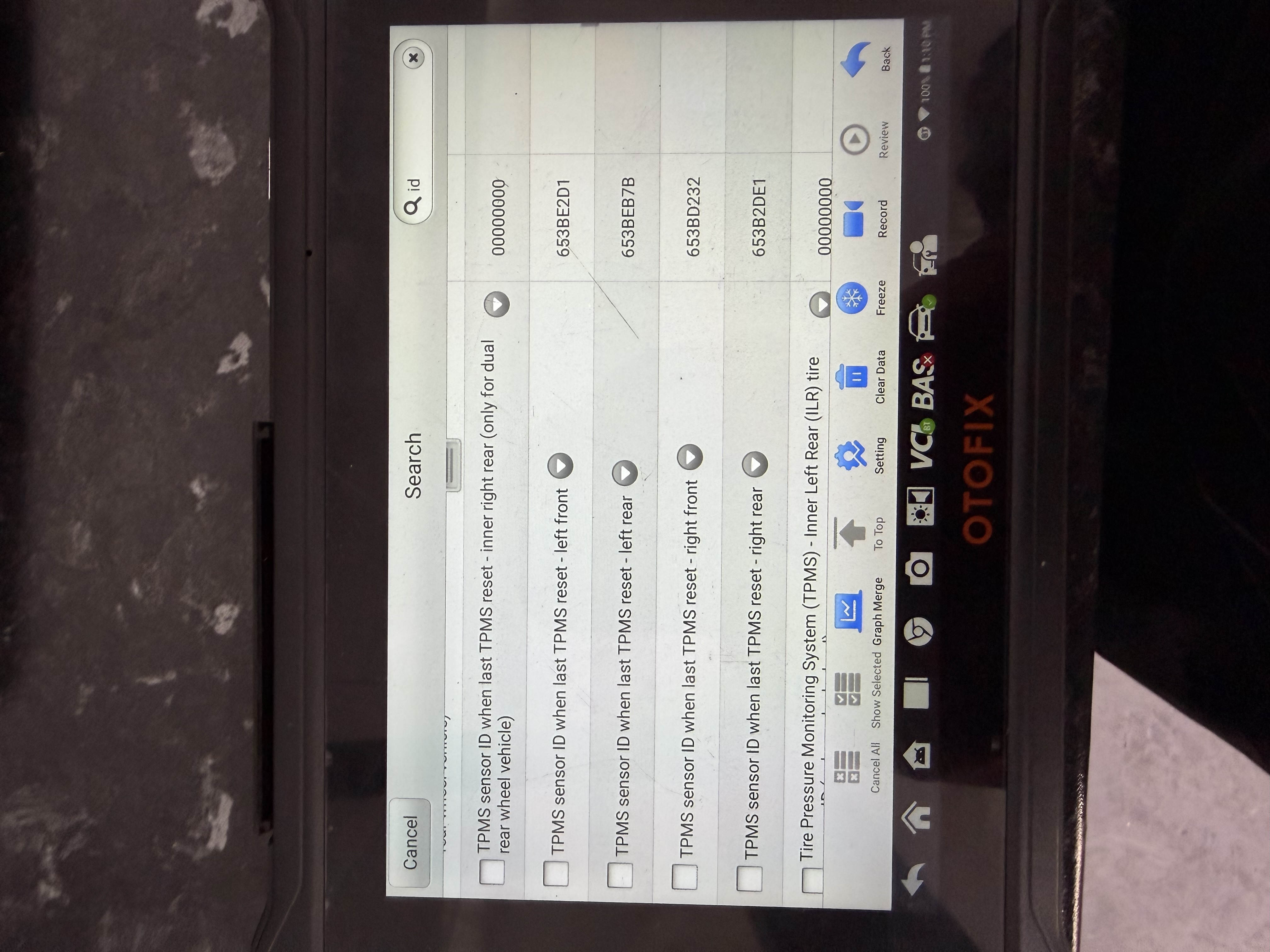
On vehicles using individual pressure sensors, the TPMS stores information relating to the sensors fitted at each wheel.
That information can help us establish what the vehicle is expecting to see.
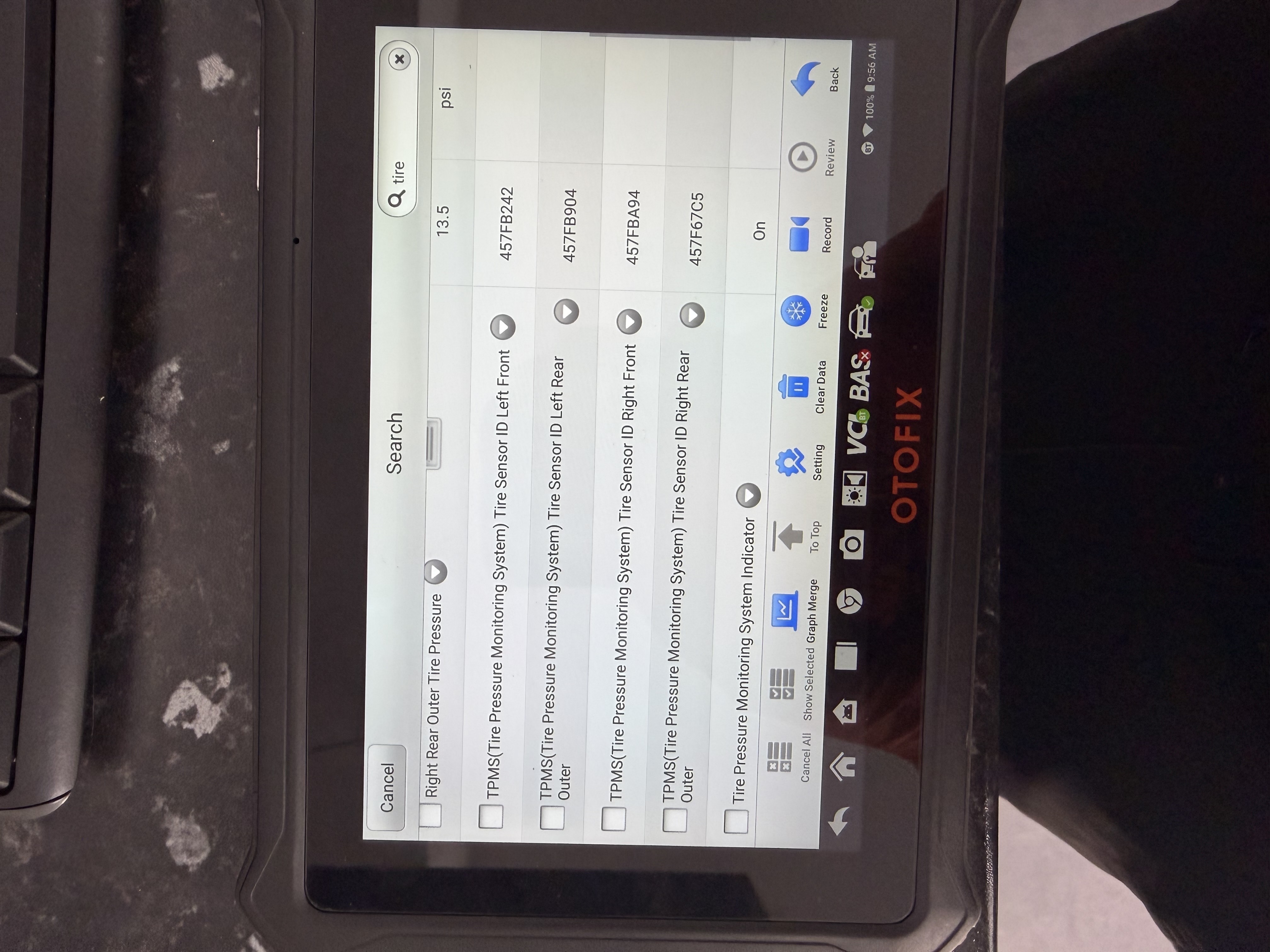
Individual TPMS sensor identification data stored by the vehicle.
This gives us much more to work with than simply looking at a warning light on the dashboard.
We can compare what the vehicle expects with what the system and individual wheels are actually reporting.
And sometimes a sensor isn't communicating at all
Another vehicle gave us a completely different result.
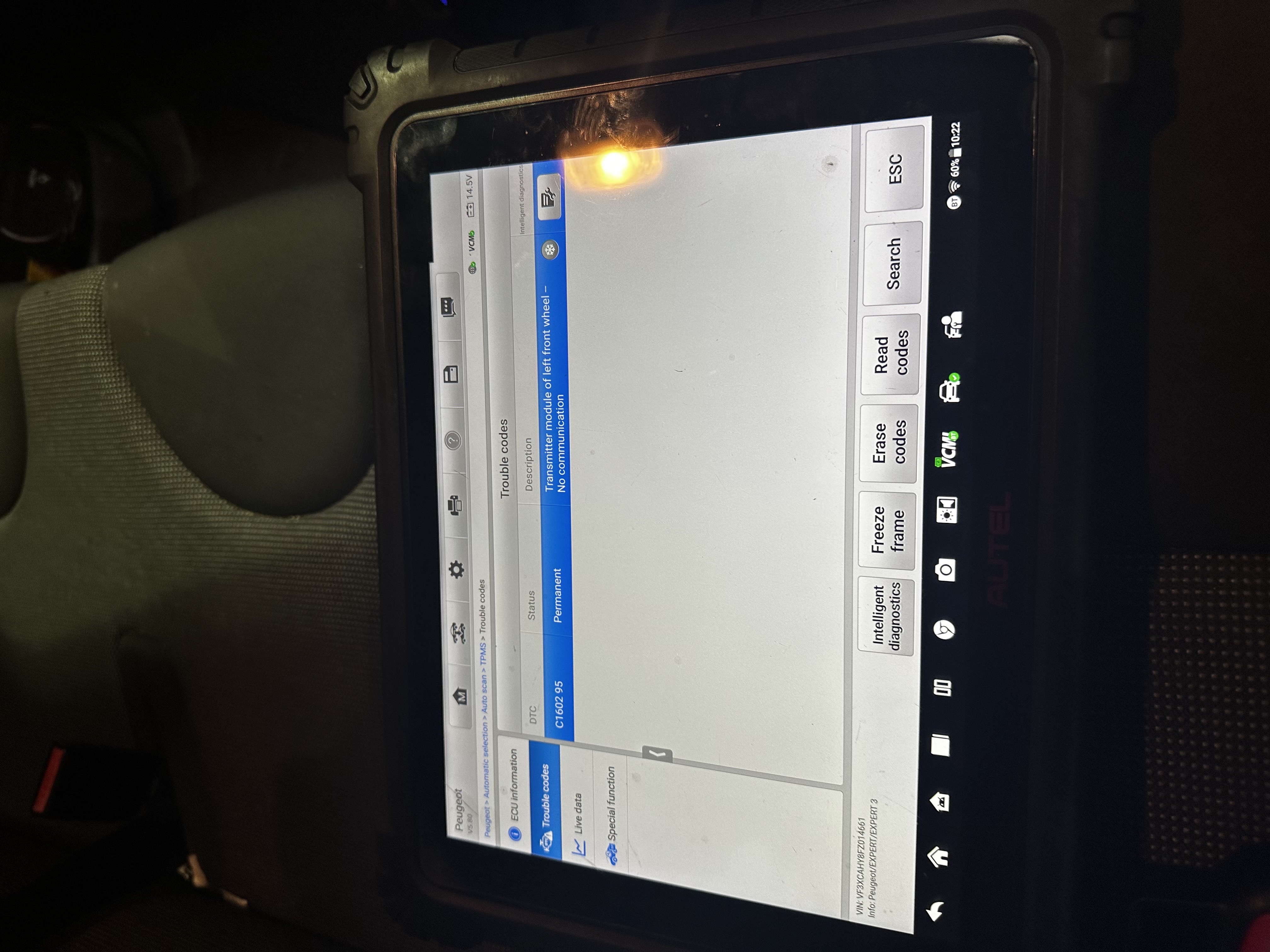
The system had recorded a permanent fault relating to the left front wheel transmitter with no communication.
A completely different TPMS problem. This vehicle could not communicate with the left front wheel transmitter.
Compare that with the vehicle showing 13.5 psi.
One vehicle was receiving pressure information and showing a genuine low pressure condition.
The other was telling us it could not communicate with a particular wheel transmitter.
The warning to the driver may appear similar.
The fault behind it isn't.
That is why “the TPMS light is on” isn't a diagnosis.
Fault codes help, but they still need interpreting
We also see vehicles with faults stored within the TPMS system.
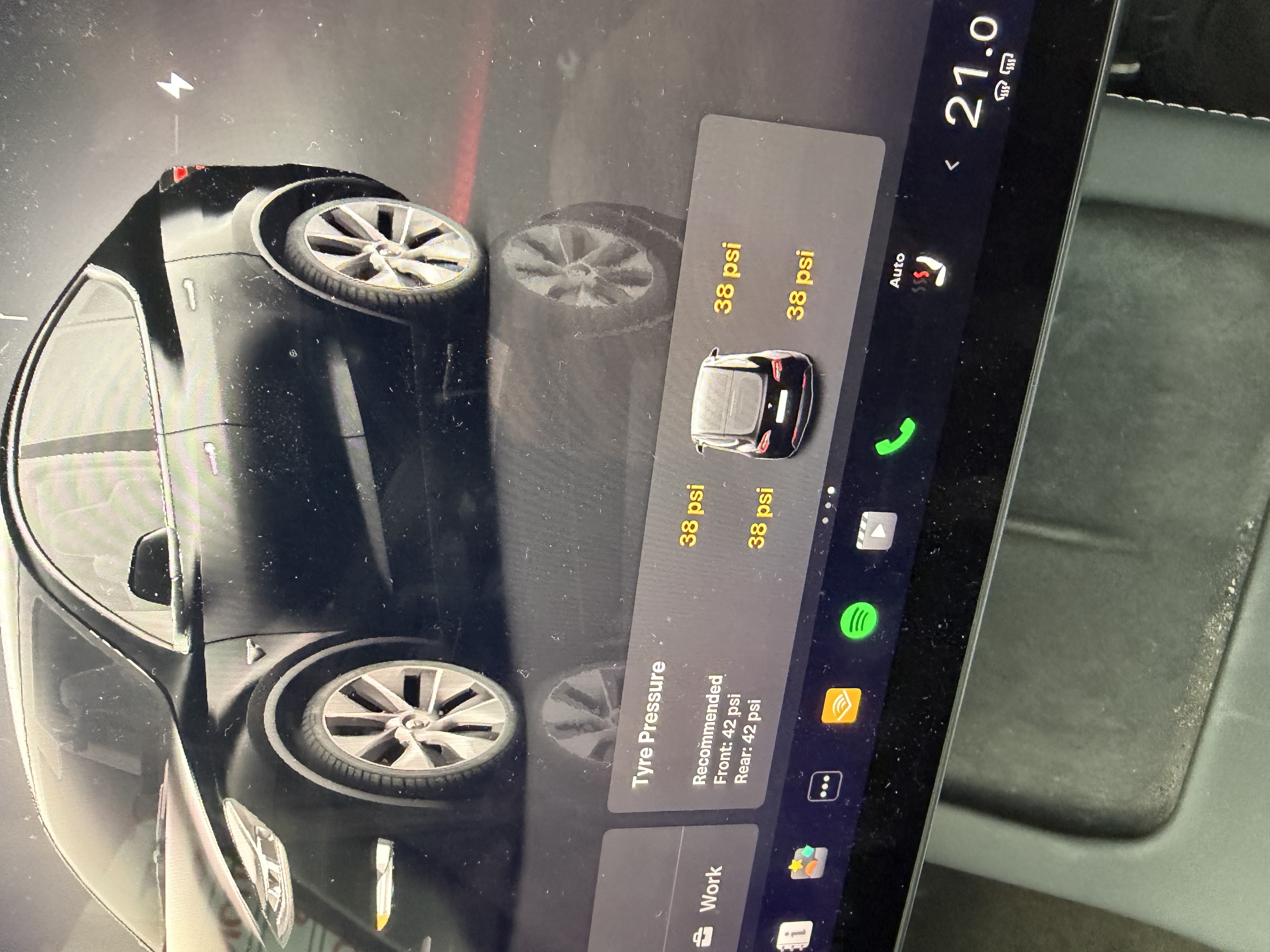
A TPMS signal error stored in the vehicle.
A fault code gives us another piece of information.
It does not automatically tell us to replace something.
We use fault information alongside the actual tyre pressures, what the sensors are doing and the physical condition of the tyre, valve and wheel.
That is how you get from a warning light to an actual reason for the fault.
What the driver sees is only part of the story
Some vehicles make tyre pressure information available directly to the driver.
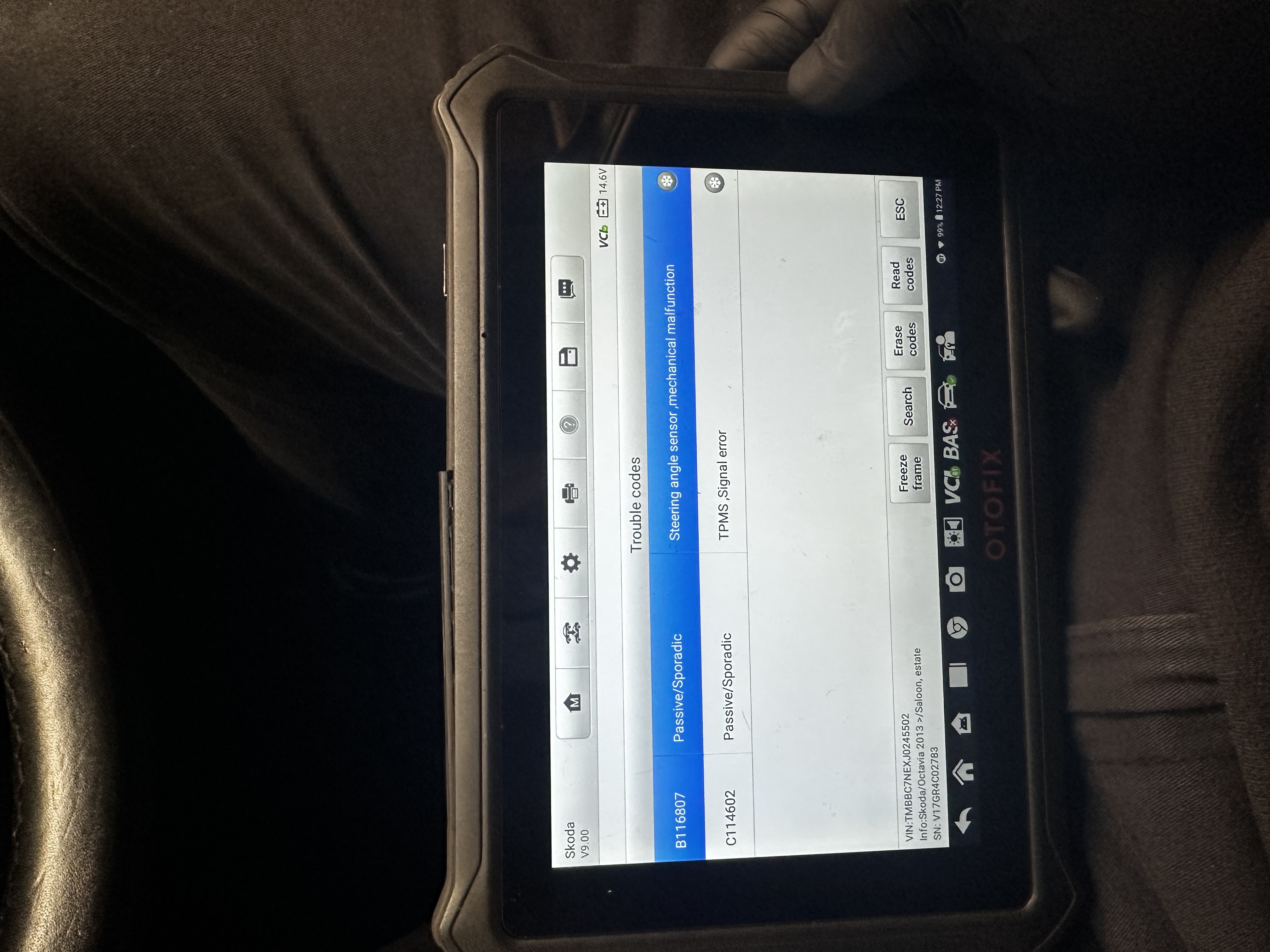
Individual tyre pressures displayed by the vehicle.
That information can be useful, but it still needs context.
If one tyre repeatedly drops while the others remain stable, there is a reason for that pressure loss.
The aim is not simply to make all four numbers look right again.
The aim is to understand why one of them became wrong.
What do we check when a TPMS light is on?
Our approach depends on what we find.
We may need to establish whether the tyre pressures are actually correct, whether a tyre or wheel is losing air, whether individual sensors are responding, whether the vehicle recognises the sensors fitted and whether relevant faults have been stored.
We don't need to carry out every possible test on every vehicle.
We need to do the right checks for the problem in front of us.
Then we can explain what we have found and what needs to happen next.
Will a TPMS warning fail an MOT?
It can.
For vehicles where TPMS forms part of the MOT inspection, a system that is malfunctioning or obviously not working can result in an MOT failure.
There is an important difference between the TPMS itself having a fault and the system warning the driver that a tyre is genuinely low on pressure.
If your MOT is approaching and the TPMS light is on, it makes sense to find out why it is on rather than simply resetting it and hoping it stays away.
You can read the current DVSA MOT inspection requirements here:
DVSA MOT inspection manual: tyres and TPMS
Don't just clear the warning
Resetting a TPMS warning doesn't repair a puncture.
It doesn't repair an air leak.
It doesn't restore communication with a sensor that the vehicle cannot see.
And it doesn't tell you why the pressure dropped in the first place.
The dashboard warning gives us somewhere to start.
Testing tells us what to do next.
At Shaw's Service Station, that is how we approach vehicle faults generally.
We check it properly.
We explain it properly.
We do the job properly.
You decide what gets done.
TPMS warning light on?
If your tyre pressure warning keeps returning or something doesn't look right, speak to the Shaw's team.
01745 353481
Keeping your vehicle safe, reliable and on the road.
TPMS work sits alongside our wider tyre and wheel services, including puncture repairs and Hunter four wheel alignment.