
Renault Zoe Won’t Charge? How We Found the Fault Without Guessing
A Renault Zoe arrived at our Rhyl workshop unable to charge. We worked through the high voltage system step by step until the testing pointed us to the fault.
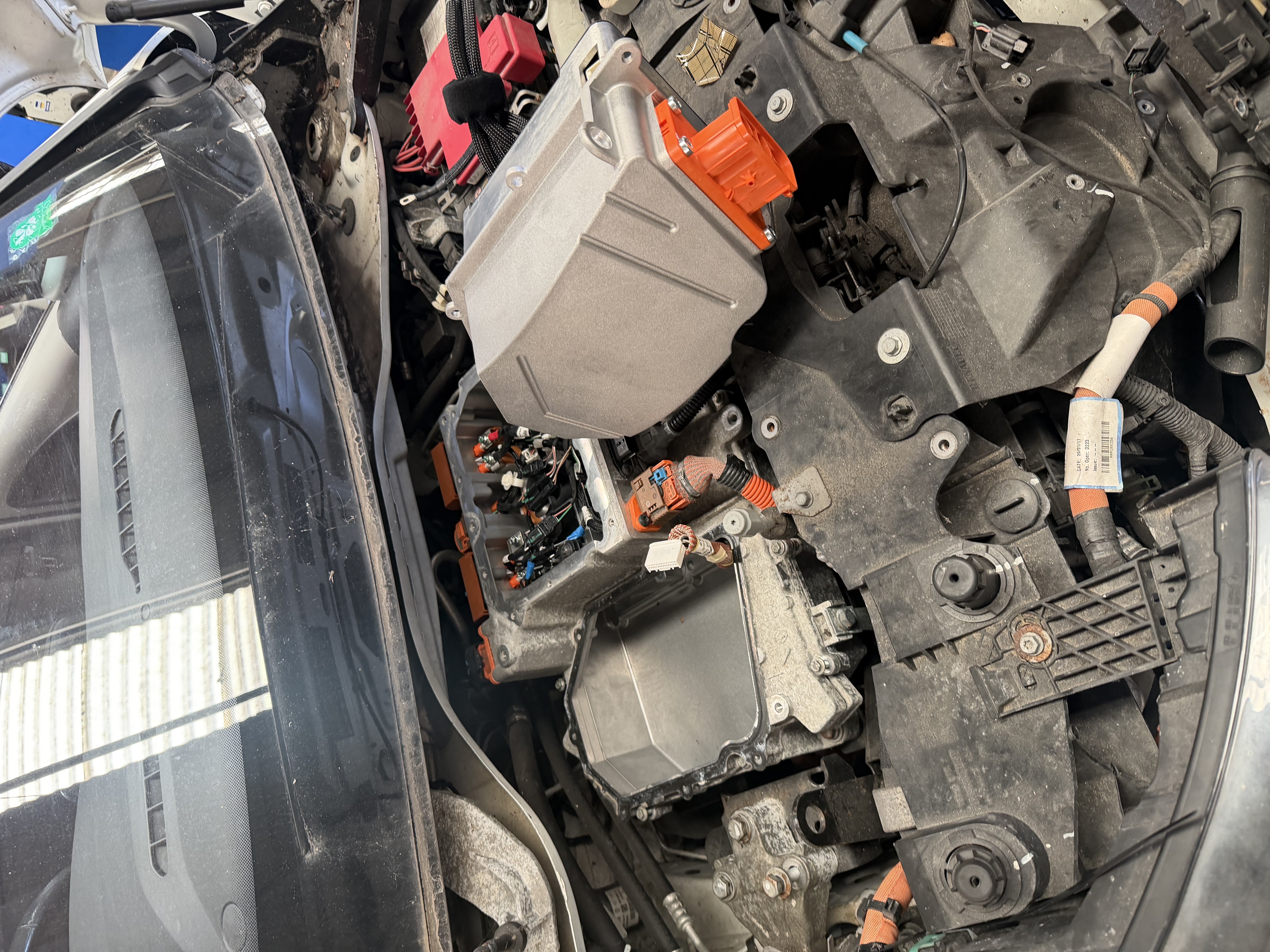
A Renault Zoe recently came into our Rhyl workshop with a simple complaint:
The car would not charge.
The fault was repeatable and the vehicle had stopped accepting a charge altogether.
With an electric vehicle, that does not automatically mean the charging socket, onboard charger or high voltage battery needs replacing.
The first job is finding out what the vehicle is actually doing.
Starting with a diagnostic assessment
Joe carried out the initial diagnostic assessment and confirmed that the Zoe was not charging.
A vehicle scan identified two relevant fault codes:
DTC069024
DTC069094
Rather than treating those fault codes as instructions to replace a component, we used them as the starting point for further testing.
Additional diagnostic time was authorised so we could work through the charging system properly, checking the electrical circuits, insulation resistance and relevant high voltage components step by step.
Checking the high voltage system
The next stage was to establish whether the problem was within the high voltage system or elsewhere in the charging circuit.
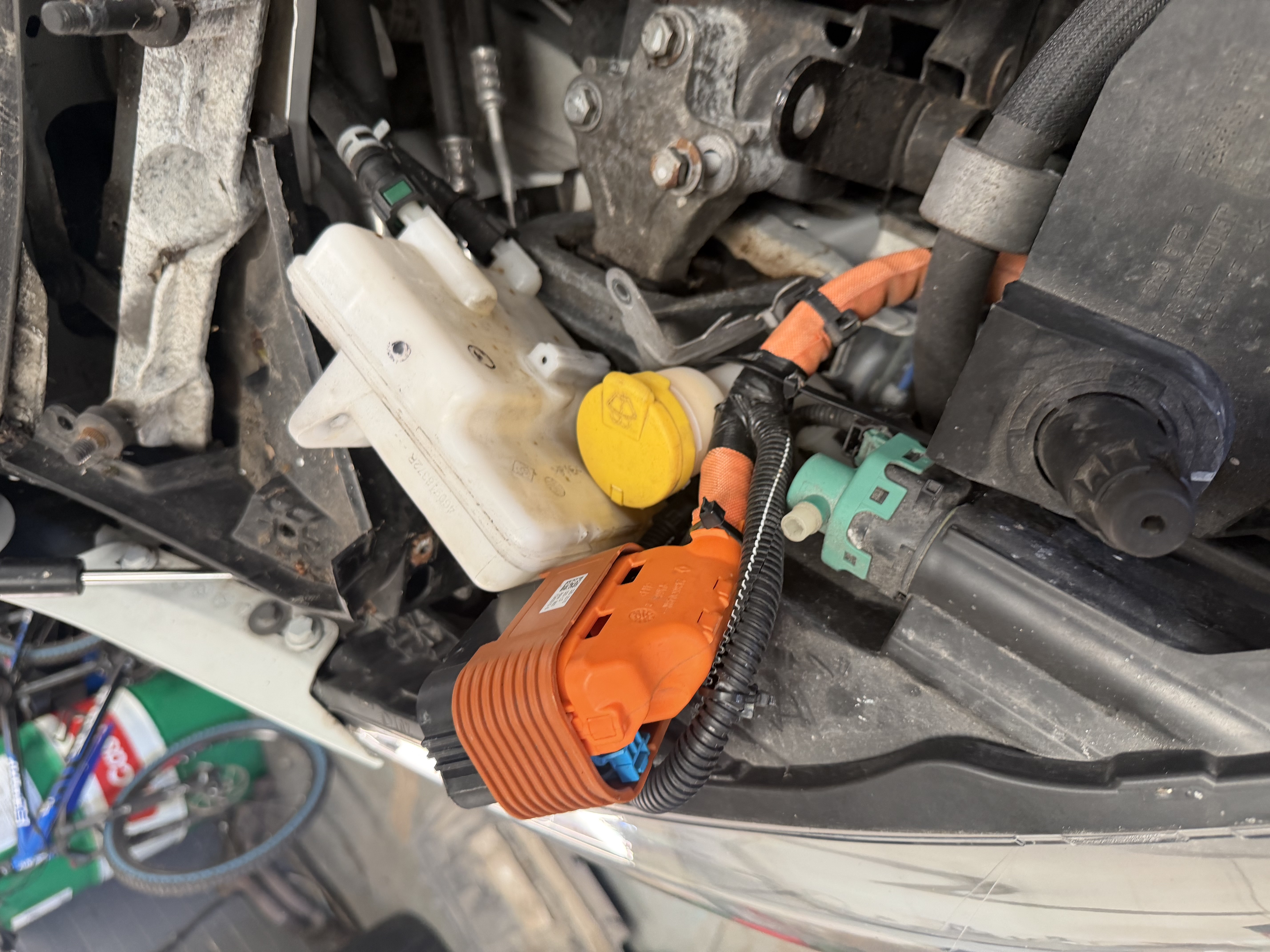
Testing the high voltage charging circuits to narrow down the cause of the charging fault.
Continuity checks were carried out between the charging port and high voltage system, followed by insulation testing.
The insulation readings from the high voltage system were good, with measurements above 400 megaohms during this stage of testing.
That gave us useful evidence and allowed us to continue narrowing down the fault rather than condemning a major component.
Getting further into the charging system
Further access was needed around the BCB and charging system so additional checks could be completed.
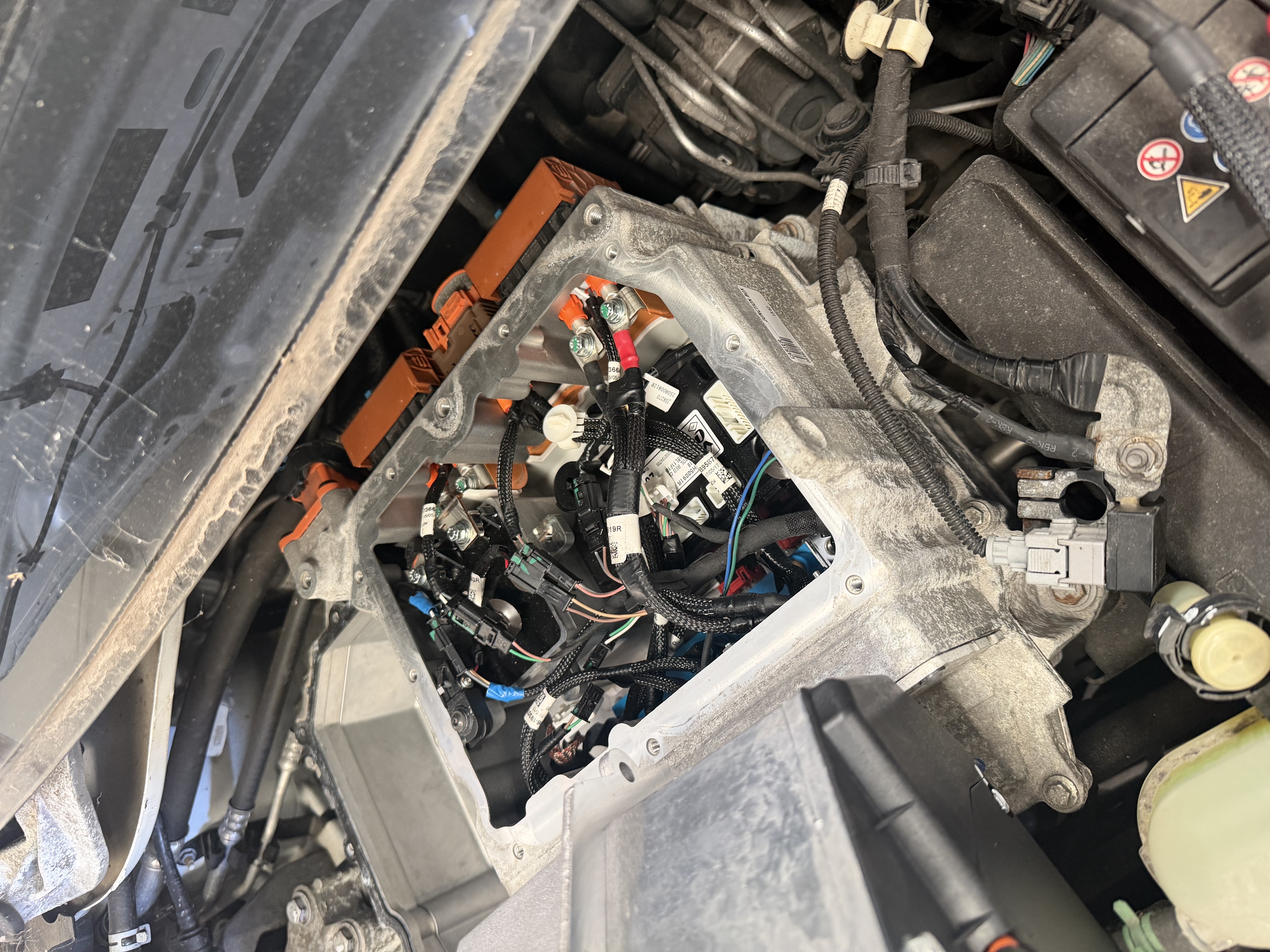
Further access to the high voltage system allowed the charging circuit to be tested in more detail.
The front bumper was also removed to gain access to the charging port and associated wiring.
There were no visible signs of burnt or damaged wiring.
Further insulation tests were then carried out across the charging circuits.
Most readings were around 4000 megaohms at 250V.
Testing between the L1, L2 and L3 circuits also produced readings around 4000 megaohms, apart from L2 to L3 which measured 4.5 megaohms.
The manufacturer's minimum acceptable reading for this test was 1 megaohm, so the 4.5 megaohm result remained above the required level.
The evidence pointed towards the charging filter
By this point we had worked through the relevant electrical and insulation checks without finding evidence to condemn the other parts of the charging system.
The results pointed towards the module charge filter, also referred to as the EMI filter, as the likely cause of the charging fault.
That was the point at which we recommended replacing it.
Not before.
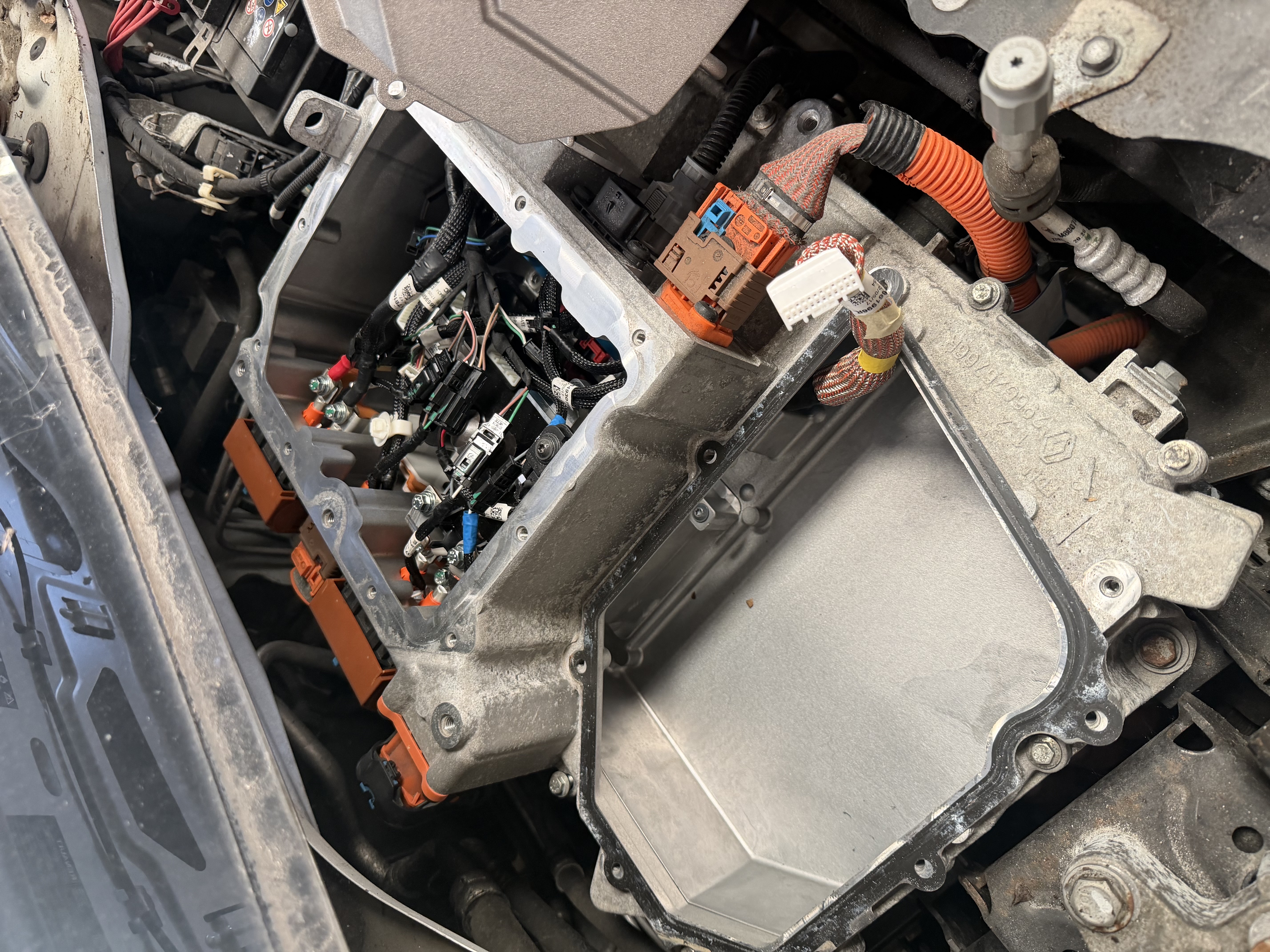
The Zoe stripped down for removal and replacement of the module charge filter.
The replacement component was sourced from Renault and the existing filter was removed and replaced.
Then comes the important bit: proving the repair
Once the replacement charging filter had been fitted, the Zoe was tested again.
The vehicle charged successfully.
We left the vehicle charging and confirmed that the original charging problem had been resolved.
That final test matters.
Fitting a component is not proof that a fault has been fixed.
Seeing the system operate correctly afterwards is.
Why this job is a good example of proper diagnosis
There were several points during this job where it would have been possible to make an assumption.
The car would not charge.
There were fault codes stored.
It involved a high voltage charging system.
But none of those things on their own told us which component needed replacing.
Instead, Joe worked through the system using measurements, wiring checks, insulation testing and technical information until the results gave us a reason to recommend the charging filter.
That is the difference between diagnosis and changing parts hoping for the best.
We test.
We measure.
We report what we find.
Then we recommend the next step.
EV and hybrid work at Shaw's
EV and hybrid diagnostic and repair work is carried out at our Rhyl workshop.
We have invested in the training, equipment and technical capability needed to work safely and properly on high voltage vehicles.
 |
 |
Renault Zoe or EV not charging?
Charging faults can have different causes, so the first step is establishing what is actually wrong with the vehicle.
If we recommend work, we want to be able to explain what we found and why.
We check it properly.
We explain it properly.
We do the job properly.
You decide what gets done.
Shaw's Service Station
Rhyl
01745 353481
Keeping your vehicle safe, reliable and on the road.
You can find out more about our EV and hybrid servicing and repair capability at our Rhyl workshop.