
Fuel Injector and Fuel System Testing — Why Resistance and Pressure Tell Different Stories
A fault code pointing to an injector does not confirm the injector has failed. Here is how Shaw’s investigates fuel system faults before any parts are ordered.
Fuel delivery problems — rough running, poor starting, hesitation or misfires — can have multiple causes that overlap in their symptoms. A fault code pointing to a specific injector does not confirm the injector has failed. It tells you the control module detected a problem in that circuit. The circuit includes the injector itself, the wiring to it, the driver circuit in the ECU, and the fuel supply reaching it.
Injector resistance testing
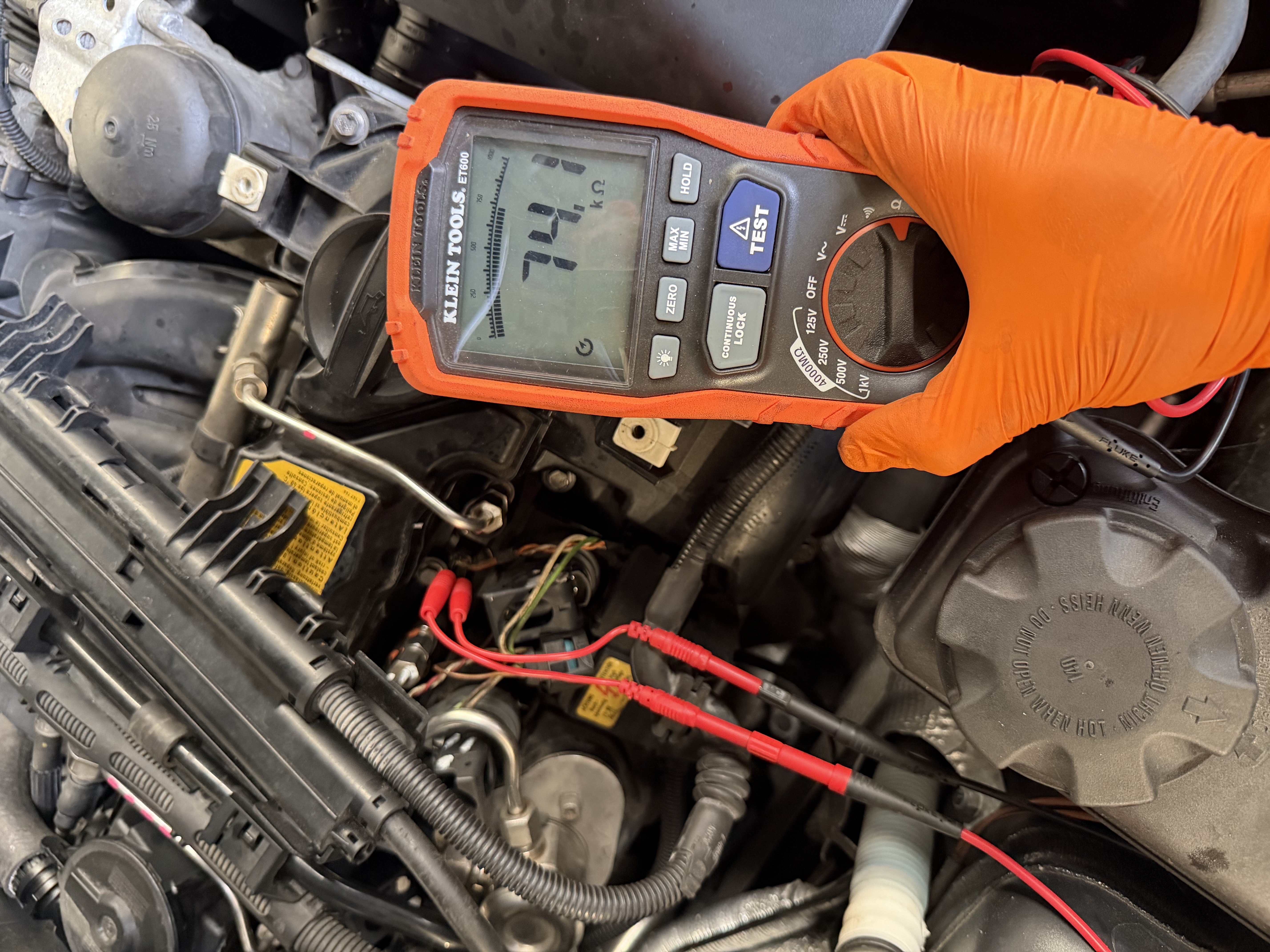
Measuring injector resistance directly at the rail. High-impedance injectors typically read 12–17 Ω; low-impedance injectors read 1–5 Ω. A reading significantly outside specification confirms an open or short circuit in the injector coil without needing to remove it. Comparing readings across all injectors in the set also reveals progressive wear on a specific injector not yet showing as outright failure.
Fuel injectors have a defined resistance range. A reading significantly above or below specification confirms an electrical fault in the injector coil. Comparing all injectors also reveals significant variation between cylinders that can indicate progressive wear before it becomes a consistent fault code.
Fuel rail and cylinder pressure testing
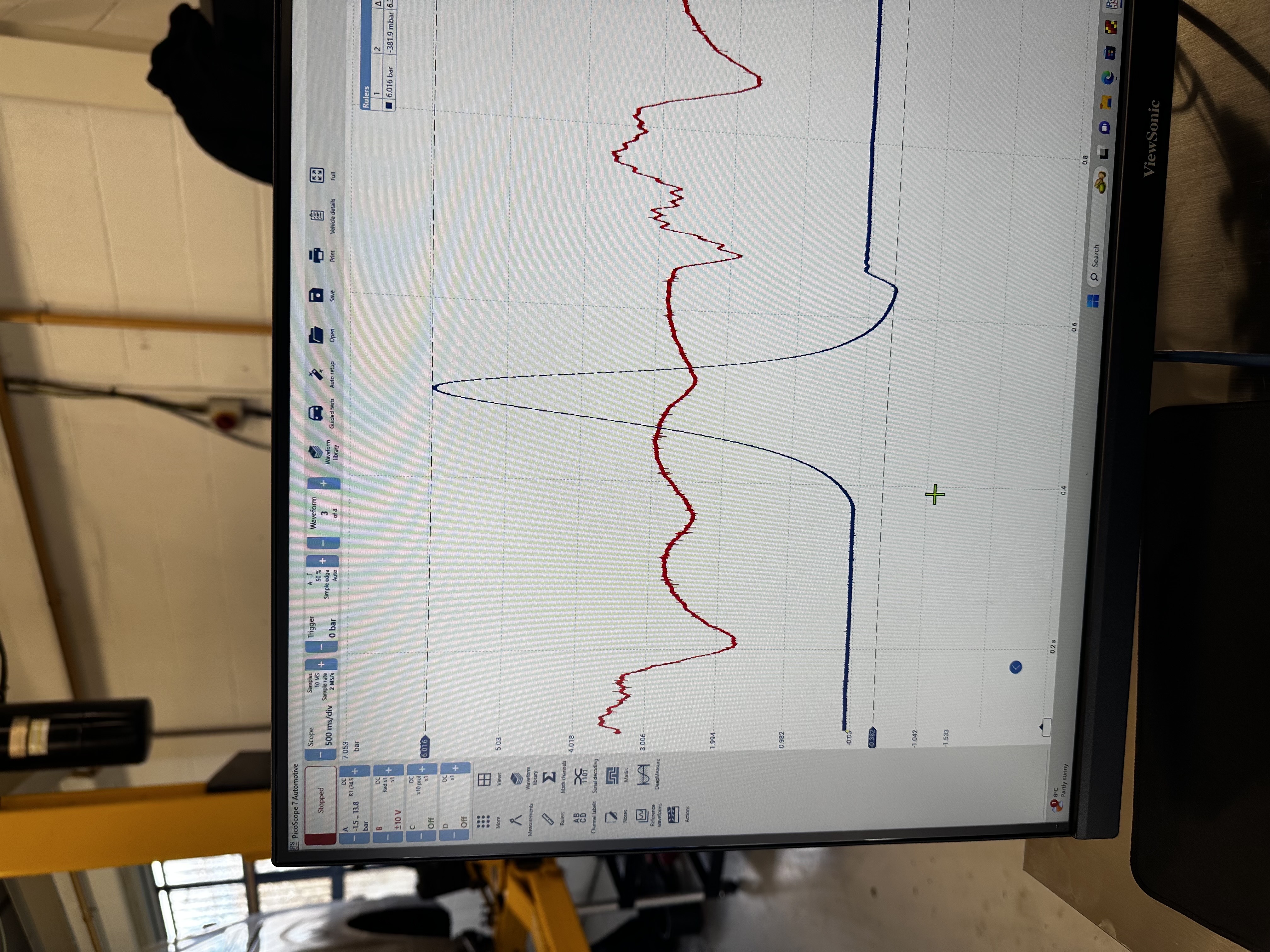
Where injector resistance tests are electrically normal but symptoms persist, the next step is measuring actual pressure in the system. A fuel rail pressure transducer records whether the pump is delivering adequate pressure and whether it drops rapidly after the engine stops — indicating a leaking injector allowing the rail to depressurise. A cylinder pressure trace records compression across multiple engine cycles and identifies whether a cylinder is producing less pressure than the others, which no injector replacement will fix.
What this tells us before any parts are ordered
By the time a fuel system diagnosis is complete, we know whether the fault is in the injector itself, the fuel supply, the injector control signal from the ECU, or a mechanical engine fault being misread as a fuel delivery problem. Replacing an injector without this information is a £200–£400 guess. The diagnostic assessment is £150 and it answers the question first. Fuel system diagnostic work is carried out at our Rhyl branch.
Contact Shaw’s about fuel system diagnosis →
We check it properly.
We explain it properly.
We do the job properly.
You decide what gets done.
Shaw’s Service Station
Rhyl (advanced diagnostics) & Kinmel Bay
01745 353481