
Ford 1.0 EcoBoost Oil Warning Light: What We Found When We Dropped the Sump
An oil warning brought this Ford 1.0 EcoBoost into our Rhyl workshop. When we dropped the sump, we found what had been building up inside it.
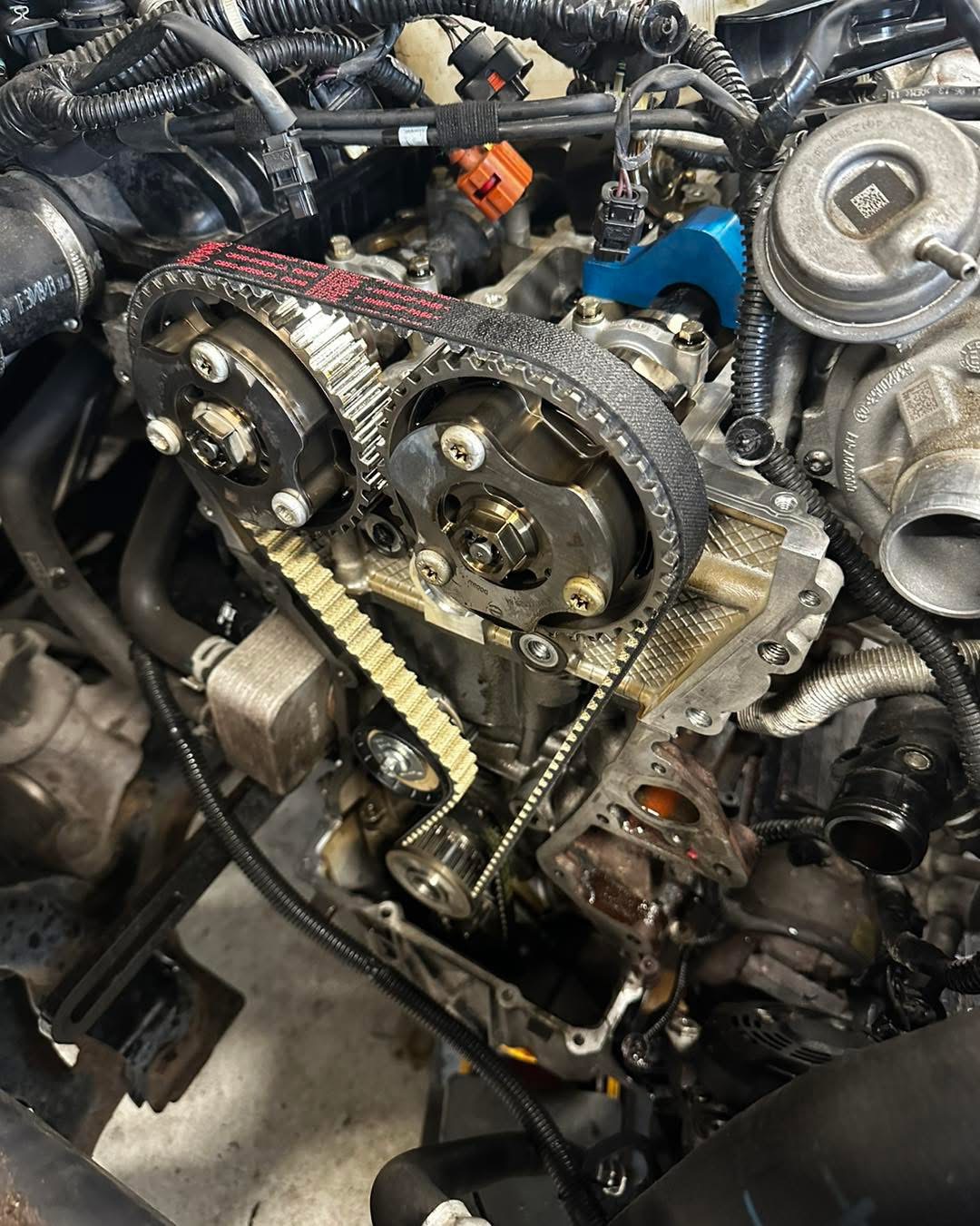
A Ford 1.0 EcoBoost came into our Rhyl workshop with an oil warning.
That was the starting point. The oil warning needed investigating properly — not assumed, not guessed at.
This is one of the most common engines we work on, fitted to the Fiesta, Focus, Puma, EcoSport and others across the last decade. It is a capable, efficient unit. It also runs a wet timing belt — a rubber belt that sits inside the engine, submerged in oil, driving the camshaft.
When that belt degrades, it does not snap cleanly and leave the driver stranded. It sheds material into the oil. And that material builds up somewhere.
This job showed exactly where.
The oil warning needed more than a quick check
The customer came in because of an oil warning on the 1.0 EcoBoost. The answer to an oil warning on this type of engine is not a simple top-up and reset. The question is what is causing it.
We needed to look further into the engine to find out.
Dropping the sump
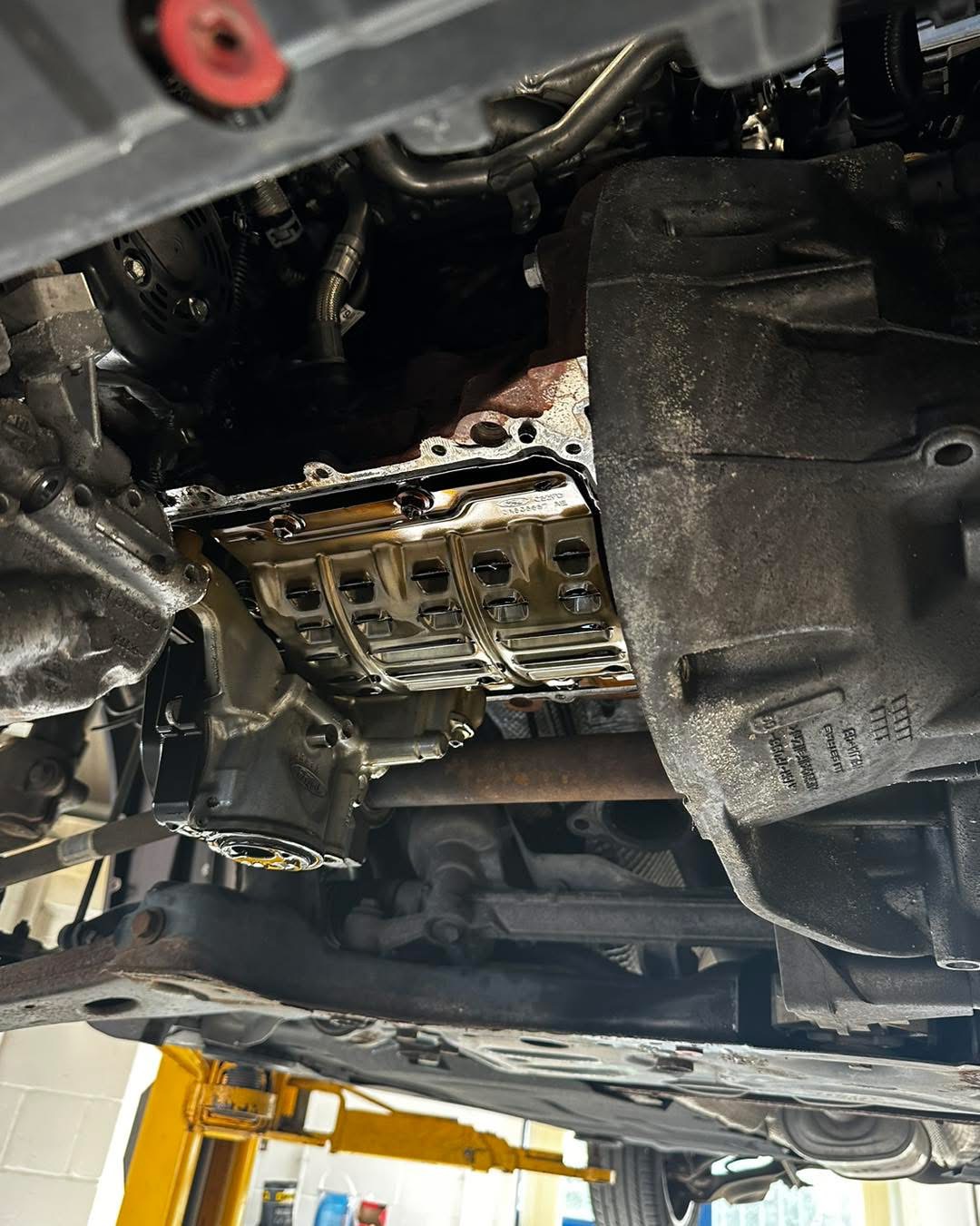
The sump removed to gain access to the oil pump pickup and strainer below the engine.
To get to the truth of it, the oil pan had to come off.
Removing the sump exposes the oil pump pickup strainer — the component that draws oil from the pan and feeds it up through the engine. On a belt-in-oil engine like the 1.0 EcoBoost, this is where the evidence of what has been happening tends to sit.
What the strainer showed us
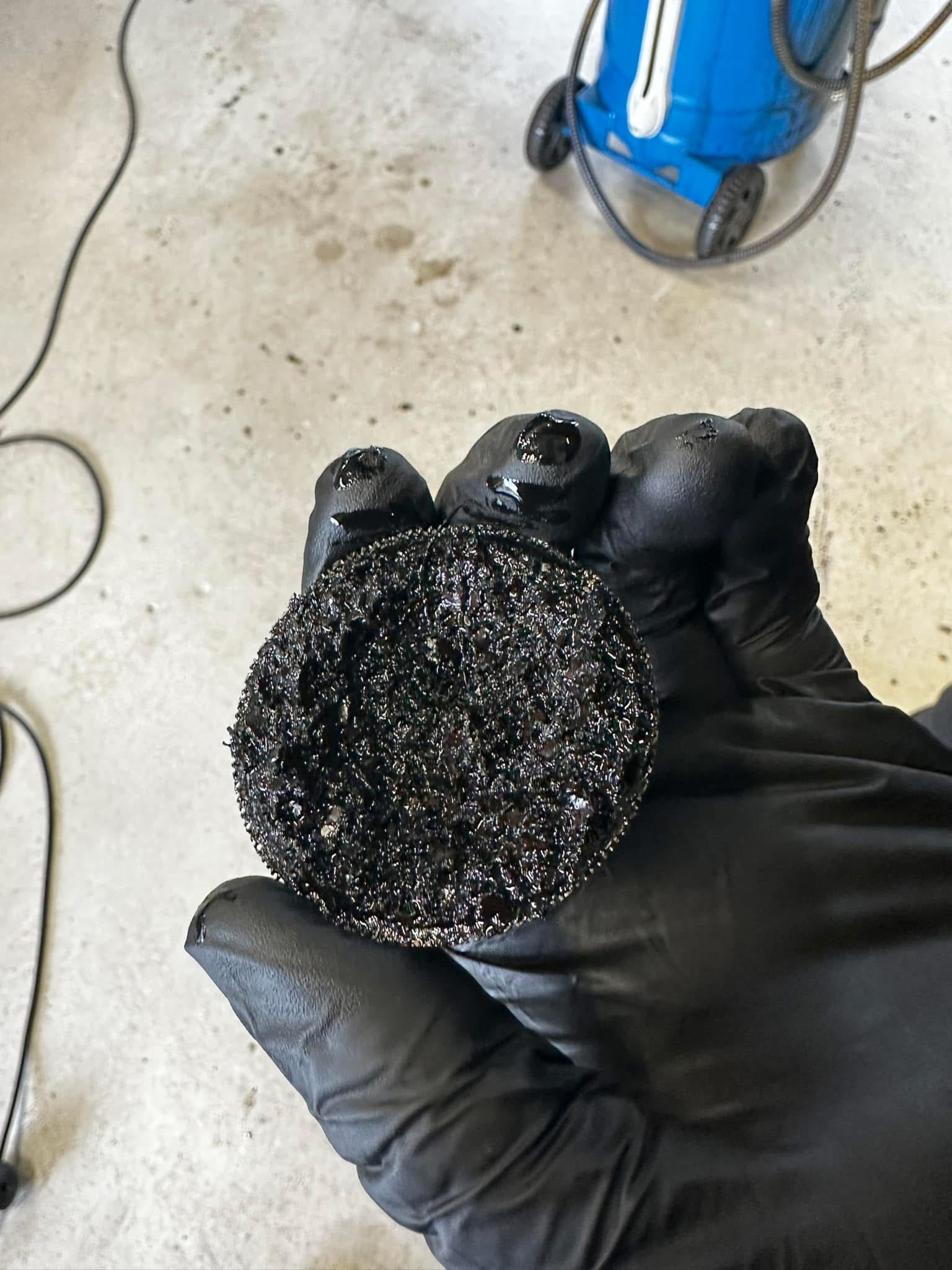
The oil pickup strainer removed from the engine. The contamination visible here is the reason the warning light came on.
The strainer was blocked solid with thick black sludge.
This is not a component that should look like this. Its job is to catch debris before it reaches the oil pump. But when contamination accumulates to this level, the strainer itself becomes the blockage — and the engine is no longer getting the oil supply it needs.
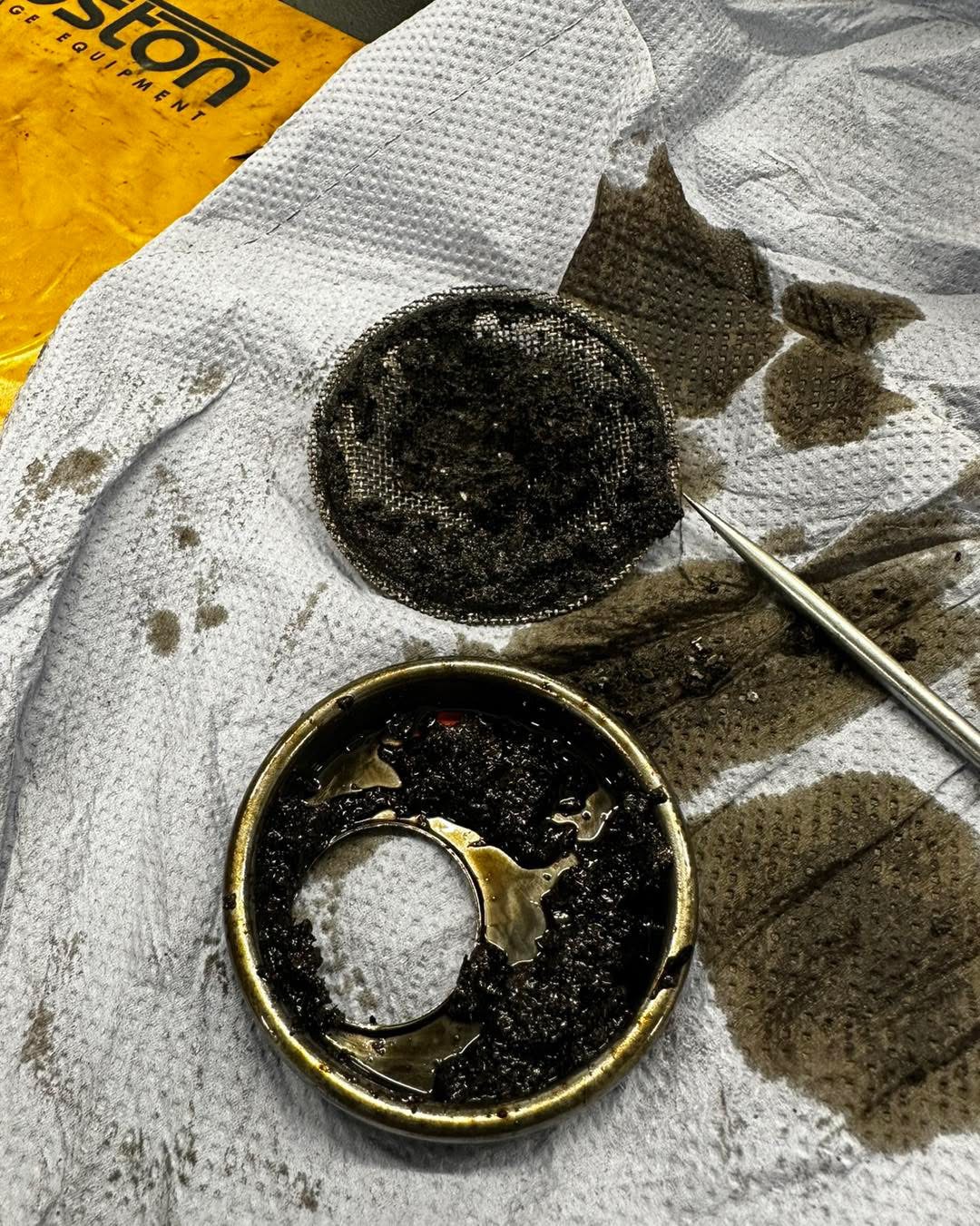
The strainer and housing out of the engine. The mesh and surrounding components were coated with accumulated contamination throughout.
It was not just the strainer
On the 1.0 EcoBoost, the turbo oil feed and the vacuum pump both depend on a consistent supply of engine oil at the right pressure to function and survive.
When we investigated further, both were found to be restricted by the same contamination. It was not one blocked component in isolation. The sludge had reached multiple oil-fed systems across the engine.
The oil warning the customer saw was not an early sign. It was a late one. The process causing it had been developing inside the engine for some time before the light appeared.
Where the contamination came from
The Ford 1.0 EcoBoost uses a wet timing belt. The belt runs inside the engine in oil. As it ages — with heat, with mileage, with time — it degrades and sheds fine material into the oil. That material circulates through the engine until it reaches the strainer, where it gathers.
Incorrect oil specification and extended service intervals accelerate the process. A belt left beyond its replacement interval accelerates it further.
Left long enough, the accumulation becomes what we found here: a strainer blocked beyond the point where the engine can get adequate oil pressure, and contamination that had worked its way into the oil feeds beyond the sump.
Clearing the system and replacing the belt
Once we understood the full extent of the contamination, the work could begin.
The strainer was cleared. The oil ways were worked through — including the turbo feed and the vacuum pump feed — until the system was clean throughout, not just at the pickup.

The new wet belt fitted to the 1.0 EcoBoost. Timing locks hold the camshafts correctly in position during installation.
The wet timing belt was replaced. Timing locks were used to hold the camshafts in position during fitment. Fresh oil went in to the correct specification for the engine.
The engine ran like new
Once the oil ways were clear and the new belt was in, the engine ran like new.
Oil pressure was restored. The turbo and the vacuum pump were receiving the supply they needed. The warning that brought the car in was gone — because the cause of it had been found and corrected.
The engine had survived.
That outcome was not guaranteed.
When an engine runs with restricted oil pressure, its components are being asked to work without adequate lubrication. The longer that continues, the greater the chance that something fails permanently. This vehicle came to us before that point.
What this means for 1.0 EcoBoost owners
The Ford 1.0 EcoBoost is not a fragile engine. But it has a maintenance requirement that matters more than most — and one that does not always get the attention it should.
The wet timing belt has a replacement interval. That interval exists because the belt degrades, sheds material, and the consequences of leaving it too long are not a roadside breakdown with a clean snap. They are a blocked strainer, restricted oil flow, and oil-fed components running without the supply they need.
The vehicle in this job made it through. But it was not far off a very different outcome.
If you drive a Ford with a 1.0 or 1.5 EcoBoost engine — Fiesta, Focus, Puma, EcoSport or others — it is worth knowing whether the belt has been done, and when. The correct interval for your specific engine is not something we are willing to guess at. Give us your registration and we will tell you exactly where you stand.
Sometimes the answer is that you have plenty of time. That is a fine answer. But it is better to know it than to wonder.
Wet belt work at Shaw's
We carry out wet belt inspection and replacement at our Rhyl workshop. The job is quoted to your specific vehicle and engine, because the work varies — and we want to tell you what yours actually needs rather than give you a number that might not apply.
You can find out more about how we approach wet belt inspection and replacement, or give us a call with your registration.
Find out about wet belt work at Shaw's →
Questions we get asked
My oil warning light came on — could it be related to the wet belt?
It can be. An oil warning on a 1.0 EcoBoost or similar wet belt engine does not automatically mean the belt is the cause, but if the belt has been in the engine a long time, belt material in the sump is one of the things worth investigating. The right first step is to find out what is actually happening rather than assume.
How do I know if the wet belt has been done on my Ford?
A full service history with evidence of the wet belt interval being completed is the clearest sign. If that history is not available, or if you are not sure what interval applies to your engine, give us your registration and we will check what the current schedule says and what your car actually shows.
Does the wet belt job include checking the strainer?
At Shaw's it does. We look at the oil pump pickup as part of the job — because fitting a new belt without checking what the old one may have left behind is not the complete job. If we find contamination, we tell you what we found and deal with it as part of the repair.
We check it properly.
We explain it properly.
We do the job properly.
You decide what gets done.
Shaw's Service Station
Rhyl
01745 353481