
Electric and Hybrid Vehicle High-Voltage Diagnostics — What We Check at Our Rhyl Workshop
High-voltage EV and hybrid systems need specialist equipment and trained technicians. Here is how Shaw’s approaches EV and hybrid diagnostic work at our Rhyl branch.
Not every garage can work on electric and hybrid vehicles safely and effectively. High-voltage systems — operating at between 300 and 800 volts in most modern EVs — require specific training, equipment and safety procedures that go beyond standard mechanical diagnostics. At our Rhyl branch, Shaw’s carries out EV and hybrid diagnostic work using specialist high-voltage equipment and trained technicians.
What makes EV and hybrid diagnostics different
The high-voltage system in an electric or hybrid vehicle requires isolation before any component can be safely accessed. Working on a high-voltage circuit without the correct equipment and procedures is not just technically inadvisable — it presents a genuine risk of serious injury.
Beyond safety, EV and hybrid diagnostics require tools that can interface with the high-voltage control systems, battery management modules and power electronics that govern how these vehicles operate. A standard OBD scanner can read some EV fault codes, but it cannot access individual cell voltages, charge cycle history, insulation resistance readings, inverter performance data or the communication between high-voltage control modules.
What we diagnose
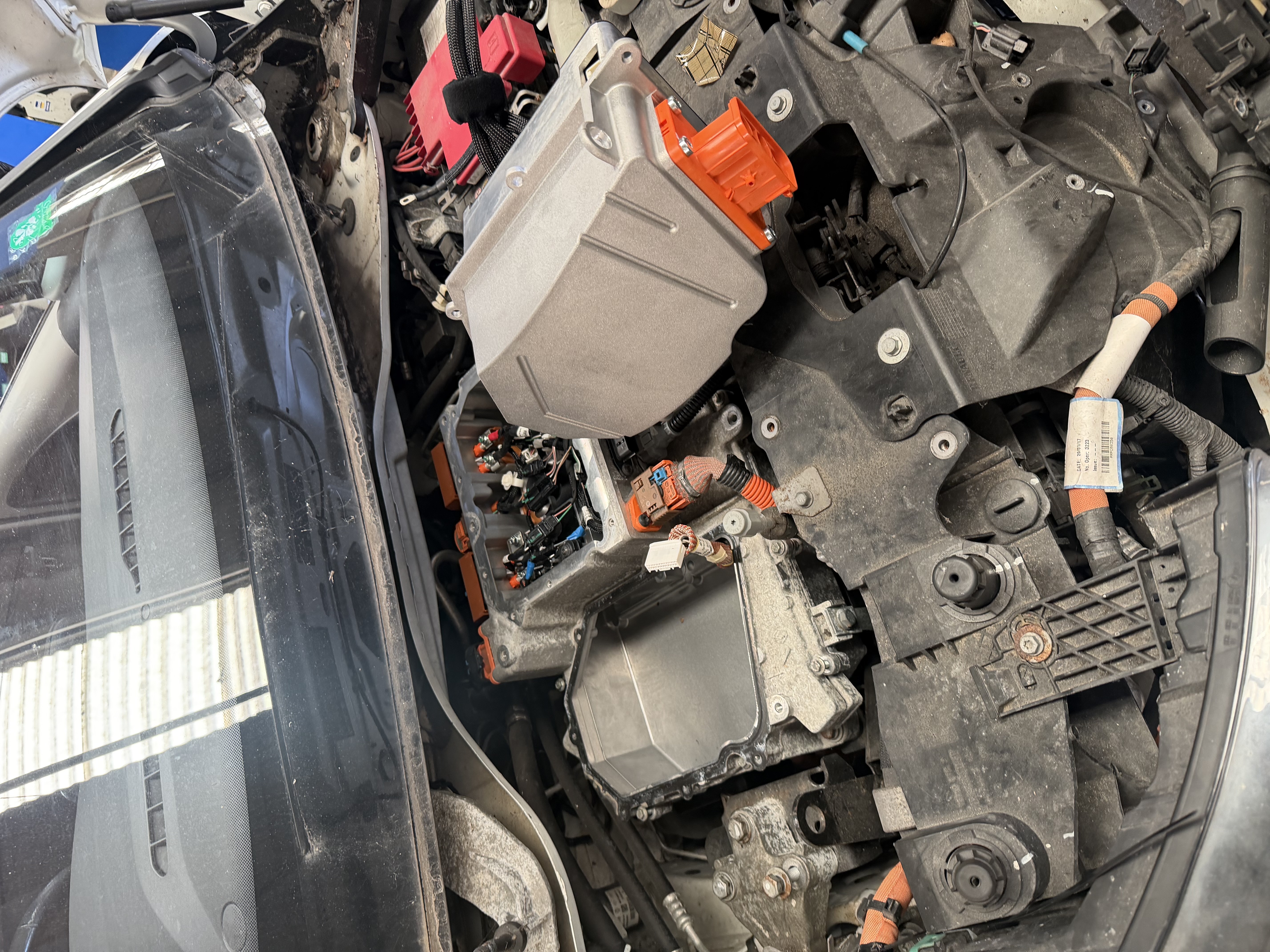
Common EV and hybrid issues we investigate at our Rhyl branch include:
- Battery fault codes and degradation — reading individual cell voltages and balancing data to determine whether a fault is in a specific cell group or across the pack
- Charging faults — AC charging circuit diagnosis, onboard charger faults, charge port issues, communication faults between vehicle and charge point
- Insulation monitoring faults — testing the isolation between the high-voltage system and the vehicle chassis
- Regenerative braking faults — diagnosing faults in the regenerative braking system that affect energy recovery and braking performance
- Hybrid system faults — communication between the combustion engine management and the electric drive system on hybrid and plug-in hybrid vehicles
- 12V auxiliary system on EVs — the 12V battery and its relationship to the high-voltage system, which causes driveability and no-start faults on some EV models
What we refer out
We diagnose high-voltage system faults. If a diagnosis confirms that major high-voltage components require replacement — such as the main traction battery, inverter or drive motor — we confirm the diagnosis clearly and discuss the options with you before any decisions are made about cost or direction.
EV and hybrid diagnostics at Shaw’s
The diagnostic assessment fee is £150. This covers the investigation and a written summary of findings. Any repair work is quoted separately based on those findings before anything proceeds.
EV and hybrid high-voltage diagnostic work is carried out at our Rhyl branch only. If your electric or hybrid vehicle has a fault that has not been resolved elsewhere, contact us before assuming a main dealer visit is the only option.
Contact Shaw’s Rhyl branch about EV diagnostics →
We check it properly.
We explain it properly.
We do the job properly.
You decide what gets done.
Shaw’s Service Station — Rhyl
01745 353481