
Can a Tyre Puncture Be Repaired? What We Check Before We Say Yes
A screw in your tyre does not automatically mean a new tyre. But it does not automatically mean a £30 repair either. Here is what actually determines whether a repair is safe and legal.
A customer pulls in. The tyre is soft or flat. They have found the cause — a screw embedded in the tread.
The question they always ask: "Can it be repaired?"
The honest answer is: sometimes yes, sometimes no — and you cannot tell just by looking at the screw. There are specific rules about when a tyre can be safely and legally repaired. Checking them properly is the first step before we commit to anything.
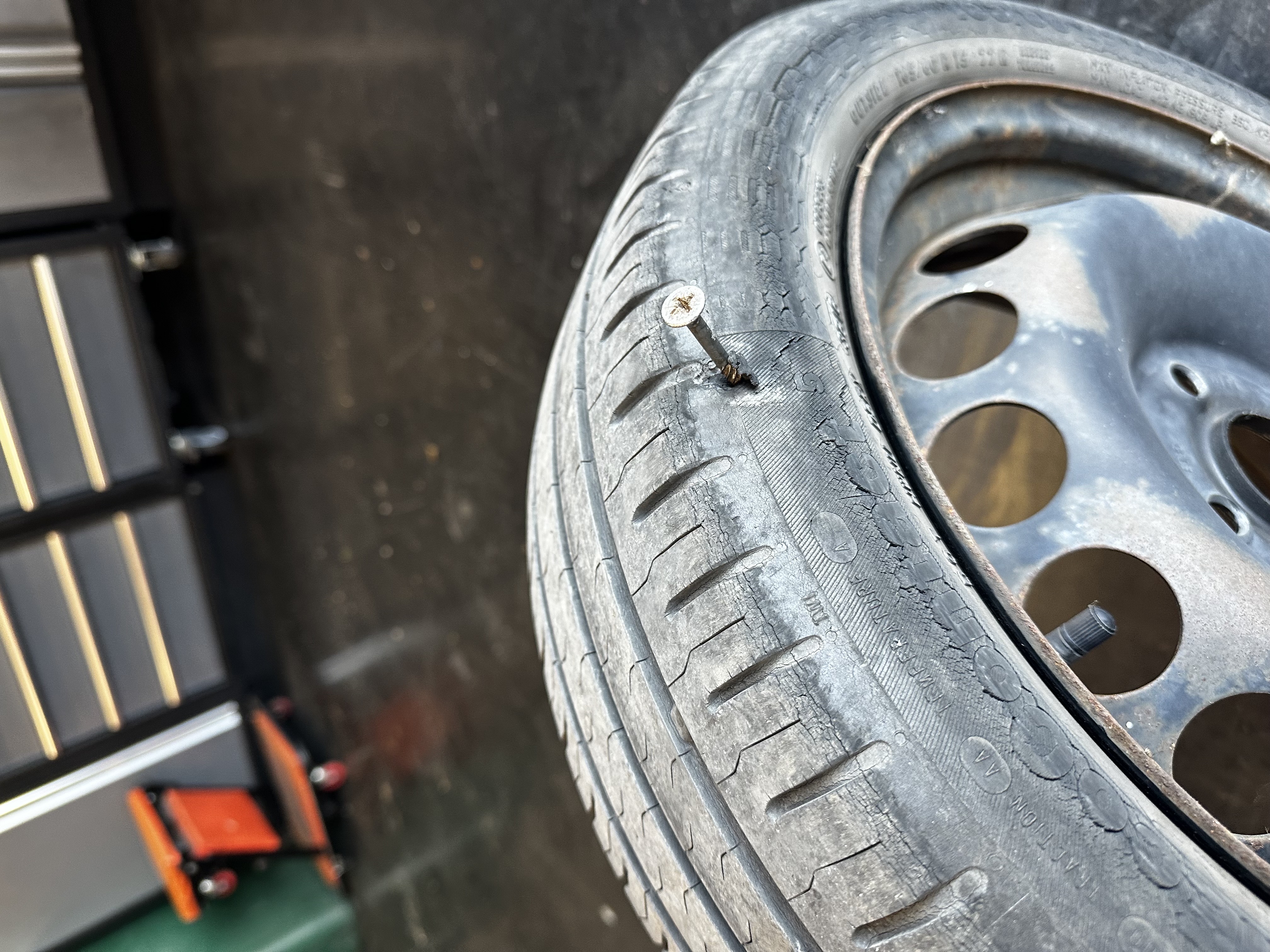
A screw in the tread — the most common cause of a slow puncture we see in the workshop.
Where the puncture is matters most
There is a defined zone on a tyre where a repair can safely be carried out. It runs across the central portion of the tread — broadly speaking, the inner three-quarters of the tread width. This is where the structure of the tyre is strong enough to hold a proper repair reliably.
Outside that zone, the picture changes.
A puncture in the shoulder of the tyre — where the tread curves towards the sidewall — cannot be safely repaired. The stress on this area is higher, and the internal structure does not lend itself to a repair holding over time.
A puncture in the sidewall cannot be repaired at all. The sidewall flexes constantly under load. Any repair in that area would be compromised by that movement. A sidewall puncture means a new tyre, not a repair.
If the screw in the photograph above had been an inch closer to the shoulder, the answer to "can it be repaired?" would have been no.
How big the hole is
The British Standard for tyre repair — BS AU 159 — sets a maximum hole diameter of 6mm for repairs on standard passenger car tyres.
Most screws and nails produce a hole well within that limit. But larger fasteners, badly corroded bolts, or a tyre that has been driven on while flat — where the original object has caused secondary tearing — can push the damage beyond what a repair can safely address.
If the hole is larger than 6mm, or if driving on the flat tyre has caused internal structural damage, the tyre needs replacing regardless of where the puncture is located.
The repair method matters
A proper tyre repair is not a plug pushed in from the outside with the tyre still on the rim. That approach might temporarily slow the air loss, but it is not a recognised permanent repair under the British Standard.
A correct repair requires the tyre to come off the rim. Once it is demounted, we inspect the interior before committing to the repair. This allows us to check that the carcass — the internal structure of the tyre — has not been damaged. A tyre can look fine from the outside and have internal damage that makes it unsafe to repair.
The repair itself is a combination method: a patch applied from the inside of the tyre, combined with a plug to fill the hole and seal the inner liner. Done correctly, this is a permanent repair. Done as a quick external plug-only fix, it is not.
This is why a puncture repair at Shaw's involves the wheel coming off the vehicle and the tyre coming off the rim. We look inside. Then we confirm whether a repair is the right answer.
When pressure loss is not actually a puncture
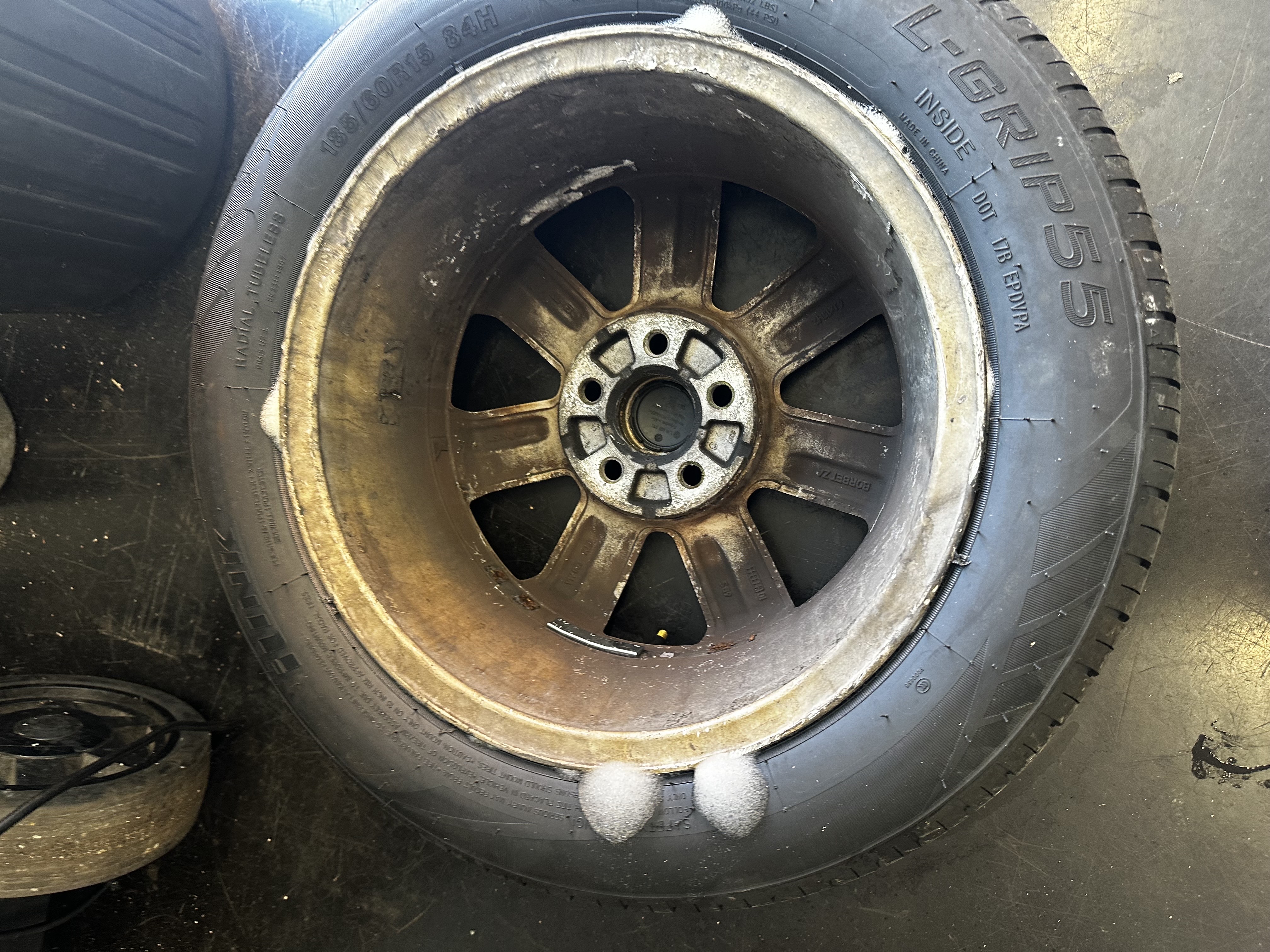
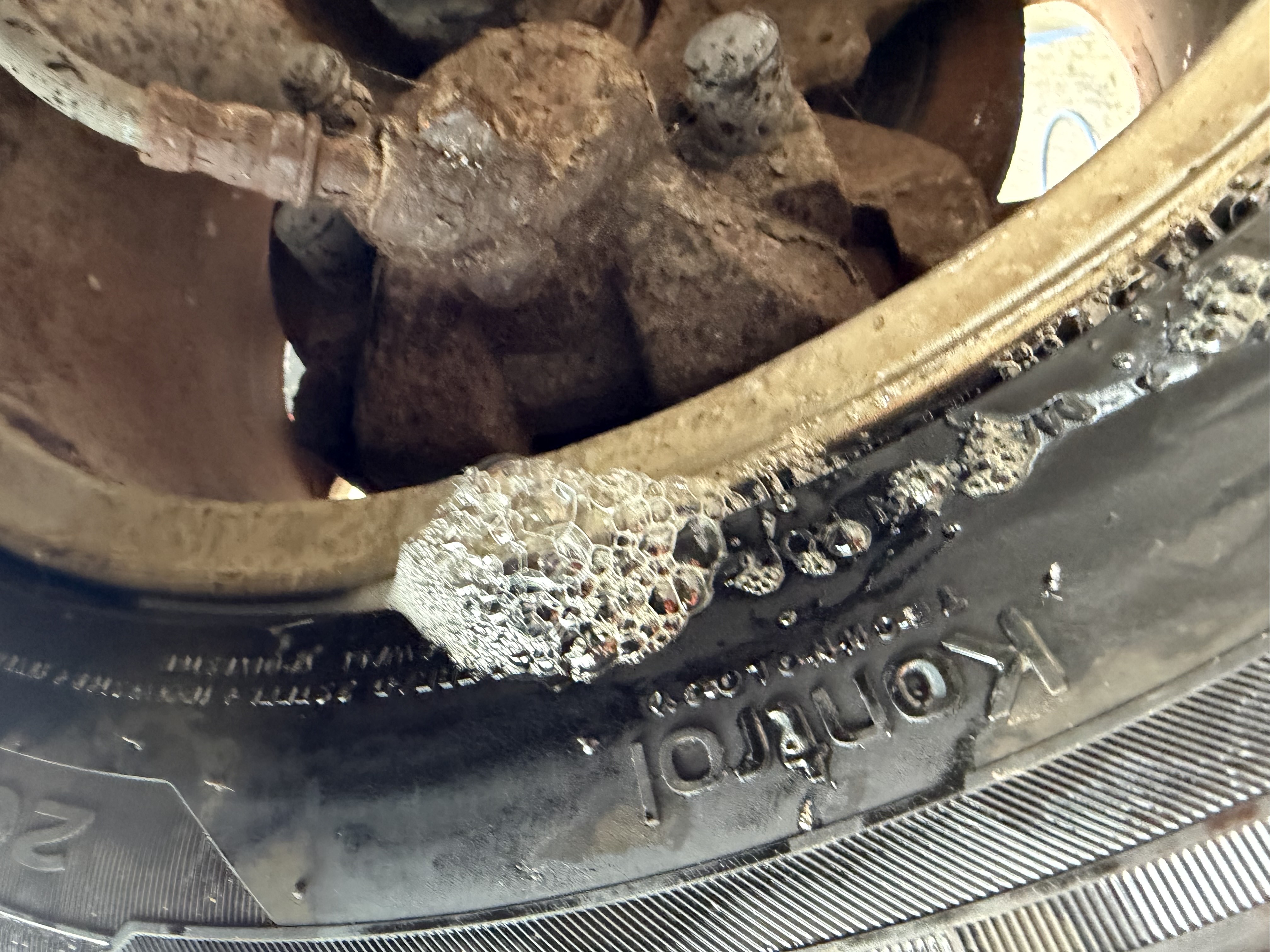
Foam bubbles forming at the tyre bead area — a slow leak from an imperfect seal between the tyre and rim, not a puncture in the tyre itself.
Not every slow puncture is actually a puncture.
Alloy wheels corrode over time, particularly around the bead seat — the surface where the tyre seals against the rim. When that surface becomes rough or uneven due to corrosion, the tyre cannot seal correctly, and air escapes slowly from the interface between tyre and rim rather than from a hole in the tyre itself.
The photograph above was taken during a leak test using a soapy solution applied to the bead area. The bubbles forming at the rim edge confirm air is escaping from the bead — not from a puncture. There is no hole in the tyre.
The correct approach here is to remove the tyre, clean the bead seat on the rim — sometimes requiring wire brushing or light machining to get back to a proper sealing surface — and refit the tyre. Applying foam tyre sealant products will not fix this, because the leak is at the bead, not through the tyre itself.
This kind of leak is easily confused with a slow puncture. It is worth checking before assuming the tyre needs patching.
If the tyre cannot be repaired
When a repair is not possible — wrong location, hole too large, internal carcass damage, bead seat beyond cleaning up — the tyre needs replacing.
Shaw's fits tyres at both branches. We confirm the correct tyre size and specification for the vehicle before fitting, and we agree the options with you before any work is authorised.
Puncture repairs at Shaw's
A tyre puncture repair is £30. That covers removing the wheel, demounting the tyre, inspecting the interior, carrying out the repair to the British Standard, remounting and balancing.
If the tyre is not safely repairable, we will tell you before doing anything further — and explain exactly why.
We check it properly.
We explain it properly.
We do the job properly.
You decide what gets done.
Shaw's Service Station
Kinmel Bay & Rhyl
01745 353481