
Brake Disc Scoring: How Do You Know When They're Past It?
Surface rust on a brake disc looks alarming but clears within a few brake applications. Deep grooves and a raised wear lip are something different. Here is what severely worn brakes actually look like, from our own workshop.
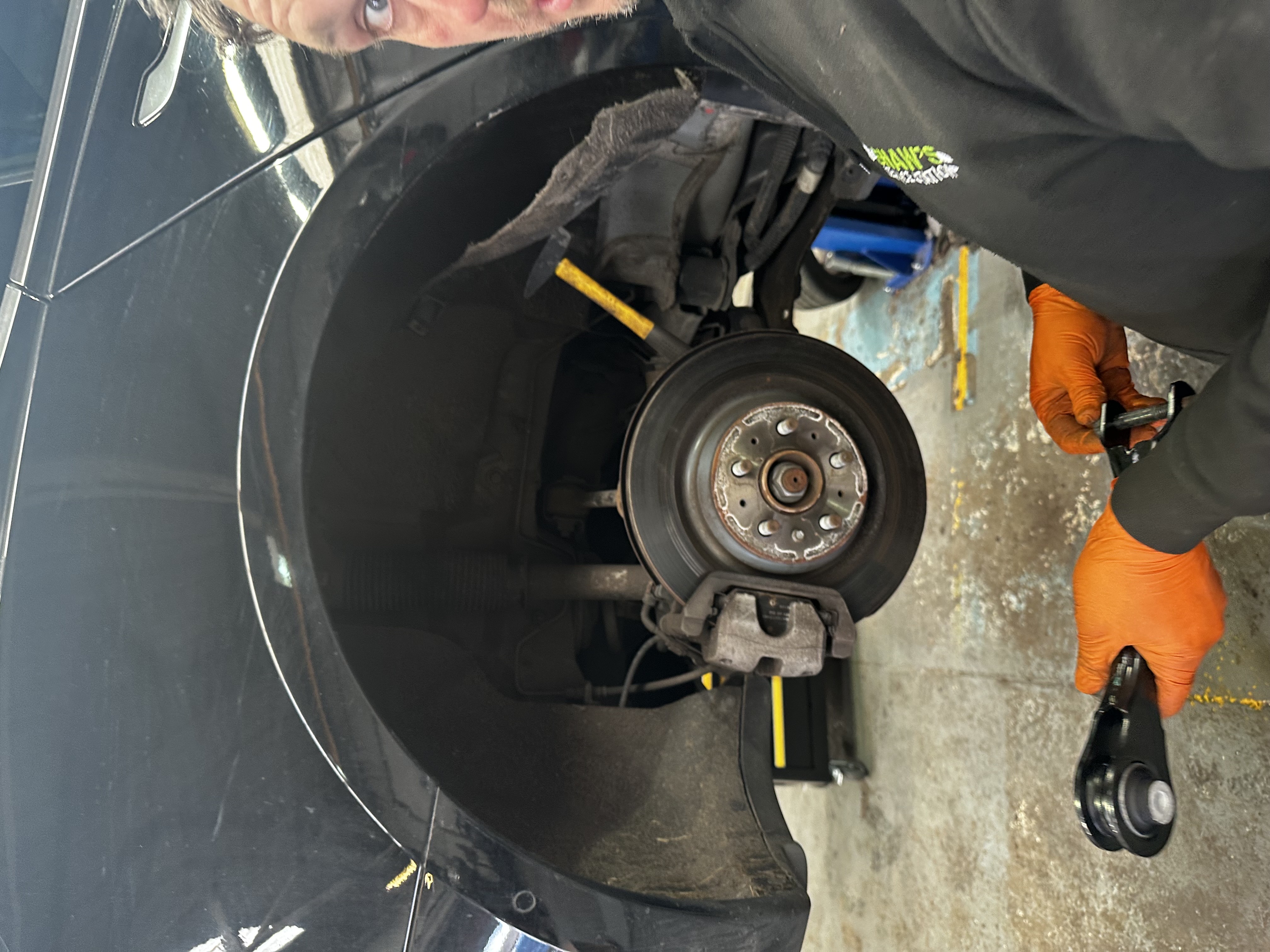
October. Roads are getting wetter, temperatures are dropping, and stopping distances are already longer before mechanical condition is even considered.
It is a good time to look at what brake disc wear actually looks like — not as a diagram or an illustration, but in real workshop photographs.
The images in this article are from brake work carried out in our workshop. They show different stages of wear, from the edge of serviceable to well past it.
Surface rust — the one that looks worse than it is
Surface rust on a brake disc appears quickly and looks alarming the first time you see it through the wheel spokes after a rainy night or a few days of sitting.
It is not a problem.
Brake discs are made from cast iron. Cast iron oxidises readily when exposed to moisture. Within the first few brake applications — usually within the first few hundred metres of driving — the brake pad sweeps the rust off the disc surface. By the time you reach the end of the road, the swept area of the disc is clean again.
If your car has been parked for several days and the brakes feel grabby or slightly pulsating for the first few stops, this is almost always surface rust clearing. Once it is gone, it is gone.
Surface rust alone is not a reason to replace brake discs.
The wear lip — what it actually tells you
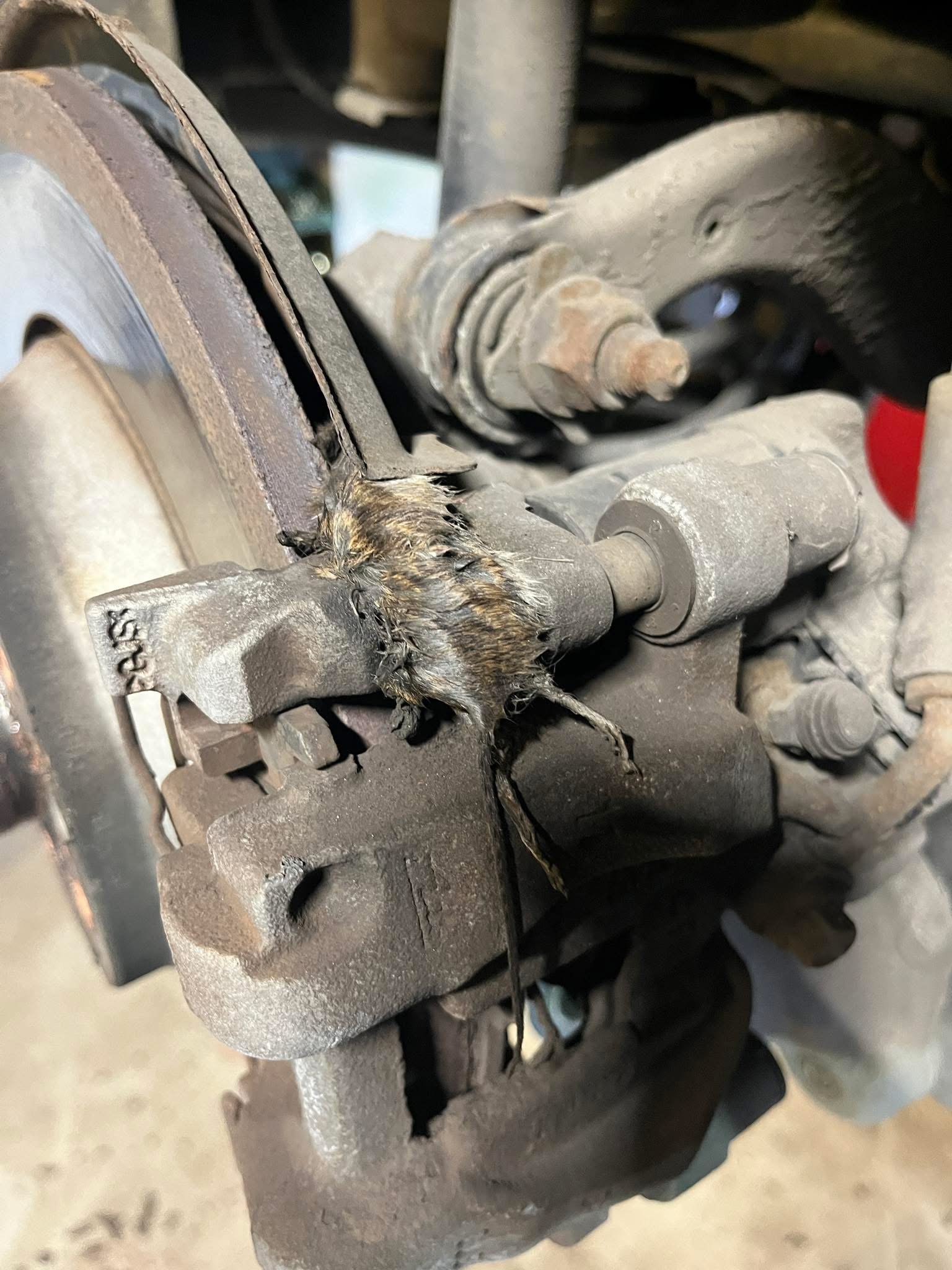
The raised ridge around the outer edge of the disc is the wear lip — it represents the difference between the original disc thickness and the current swept area thickness. Note also the brake pad on the left, with almost no friction material remaining.
The wear lip is the raised ridge that develops around the edge of a brake disc as it wears.
When brake pads press against the disc, they gradually remove material from the swept area — the part the pad actually contacts. The very edge of the disc, beyond where the pad reaches, does not wear at the same rate. Over time, this creates a raised lip: the difference between where the disc was and where it now is.
A small lip is normal wear. A pronounced lip — clearly visible in a photograph, clearly felt with a finger — tells a different story. It means significant material has been removed. The disc is meaningfully thinner than when it was new, which reduces its ability to absorb and dissipate heat during braking.
Look at the photograph above. The brake pad in the caliper shows almost no friction material left. The wear lip and the near-gone pad are telling the same story at the same time: this brake assembly has reached the end of its serviceable life.
Scoring and grooving — how discs get this bad
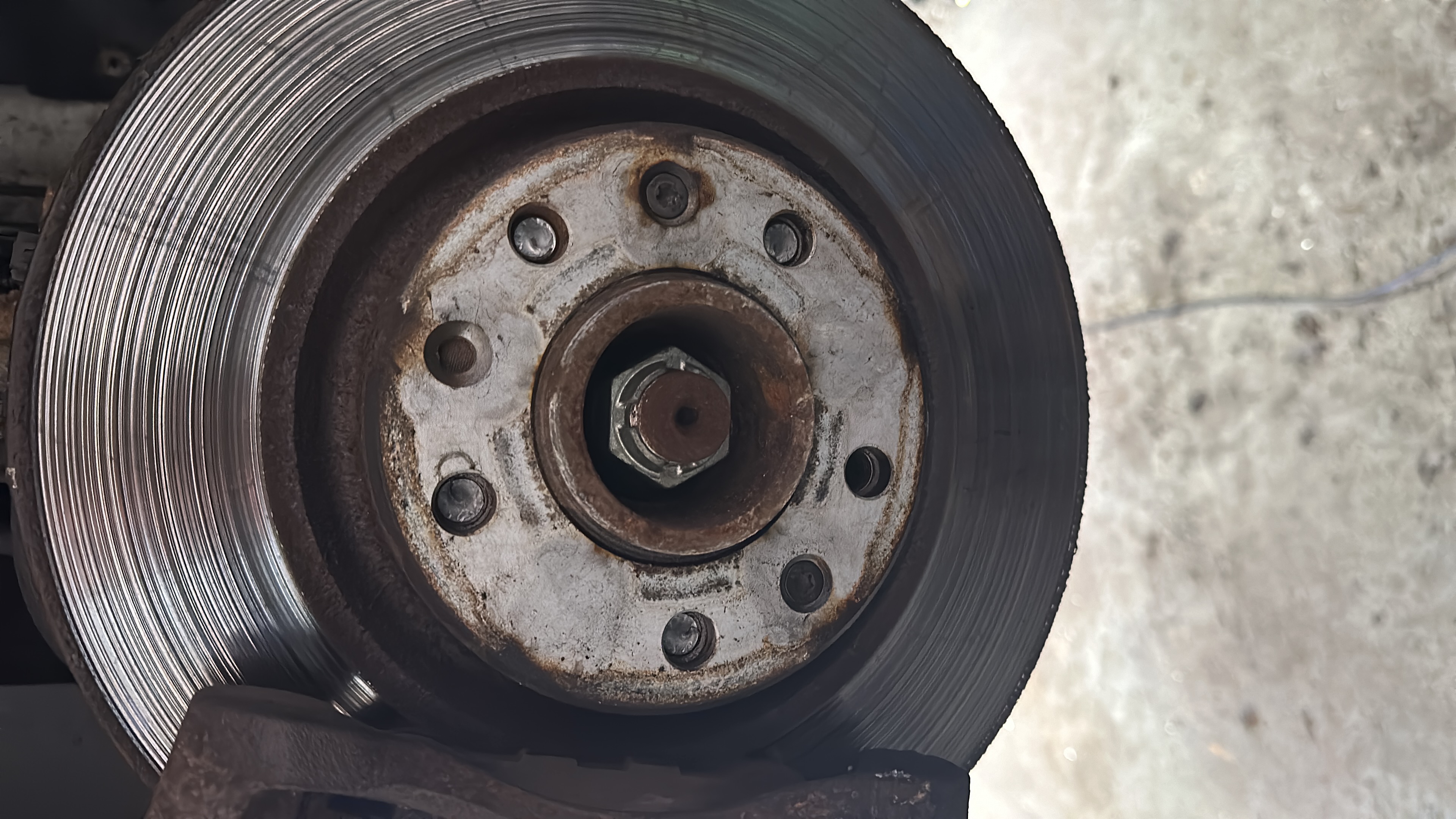
Deep grooves across the disc surface — the result of the pad friction material wearing through completely and the metal backing plate contacting the disc directly.
When brake pads are left until the friction material wears through entirely, the metal backing plate of the pad begins contacting the disc surface directly.
Metal on metal cuts grooves into the disc. The deeper those grooves get, the more the effective braking surface is reduced, the more uneven the pad contact becomes, and the more heat is concentrated in fewer contact points. Vibration and juddering under braking are common results.
A disc with grooves like those in the photograph above is not recoverable by cleaning or polishing. The question becomes whether enough material remains for a machine shop to skim the disc back to a flat, usable surface — and a disc that has been running metal-on-metal for any significant period will almost certainly have lost too much material for that to be viable.
By the time a disc is scored to this level, the pads are gone. Fitting new pads to a heavily grooved disc means the new friction material beds against an uneven surface, causing uneven wear and noise from the start. Disc and pads are replaced together at this stage.
Drum brakes — the ones that get forgotten
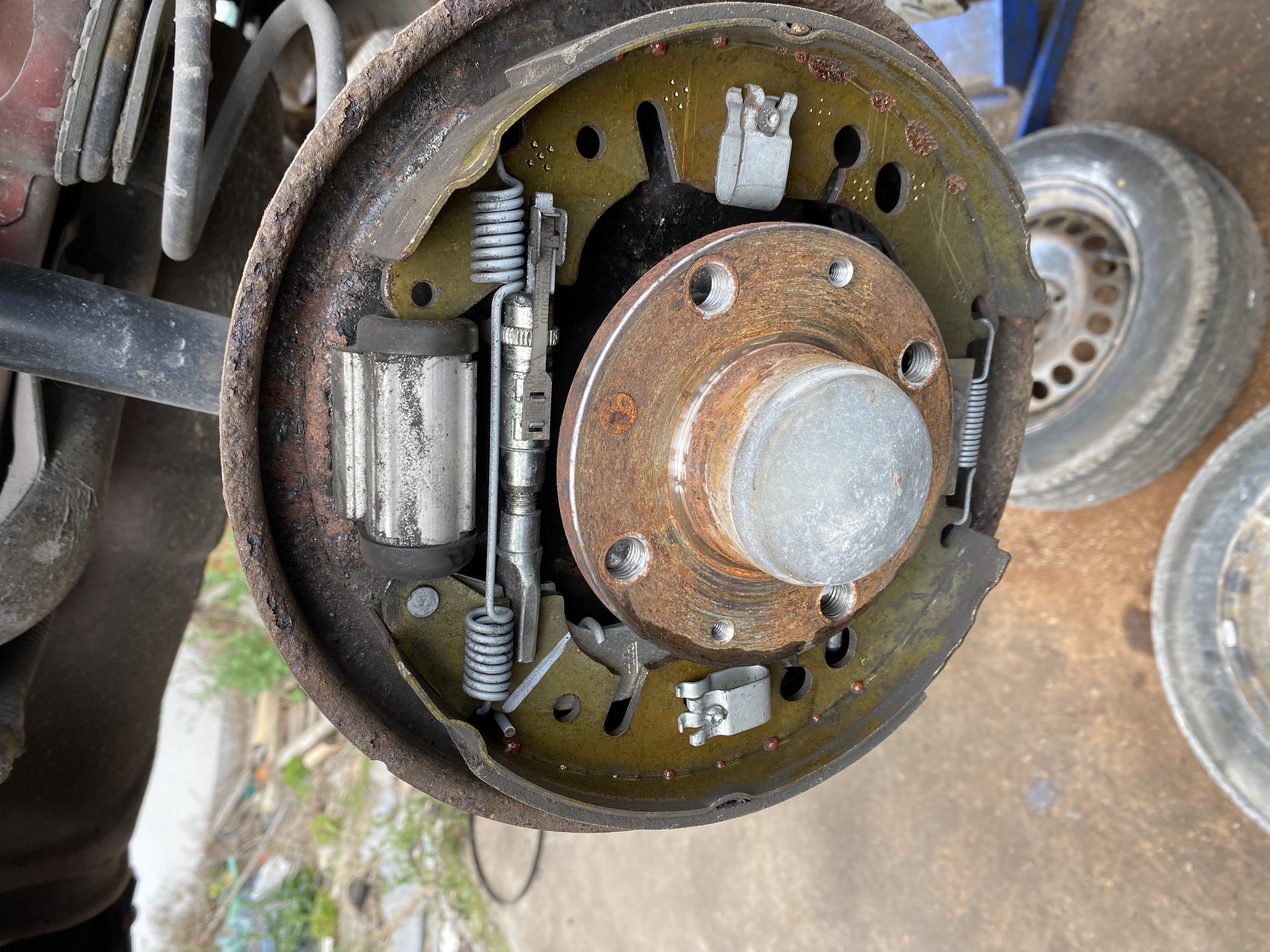
Drum brake components with the drum removed — brake shoes, wheel cylinder and retaining springs. Without removing the drum, none of this is visible from outside the vehicle.
Many vehicles still use drum brakes at the rear — older cars, budget-specification models, and some light commercial vehicles among them.
Drum brakes are completely enclosed. The drum fits over the shoes, wheel cylinder, springs and related components. You cannot see any of it by looking through the wheel. Which means they can deteriorate significantly without showing obvious outward signs.
The wheel cylinder can begin weeping brake fluid. The springs can weaken or corrode. The shoes can wear thin. None of it is visible until the drum is actually removed.
This is worth knowing because drum brake condition is sometimes overlooked during routine checks if the drum is not removed. A full brake inspection means the drum comes off — not just a check of what is visible from outside.
What to listen and look for
- Grinding — metal-on-metal. Friction material is gone. The backing plate is contacting the disc or drum. Do not drive on this.
- Squealing — may be the built-in wear indicator (a deliberate metal tab designed to make noise when pads are low), or it may be debris. Worth having checked if it persists.
- Juddering under braking — usually scored or warped discs causing uneven contact. Often felt through the steering wheel or brake pedal.
- Pulling to one side under braking — one side braking harder than the other. Possible seized caliper, uneven pad wear or a sticking brake.
- Longer pedal travel before the brakes engage — may indicate low brake fluid, a leak in the hydraulic system, or old brake fluid that has absorbed moisture and lost performance.
- Brake warning light — low pad level sensor, low fluid, or a system fault. None of these should be ignored.
Brake servicing at Shaw's
Shaw's inspects brake condition during servicing and MOT preparation at both branches. Brake inspections can also be arranged separately if there is a specific concern — noise, a warning light, a change in how the brakes feel.
If we recommend work, we will explain what we found and why the recommendation follows from it. No work is carried out without your agreement.
Find out about brake servicing at Shaw's →
We check it properly.
We explain it properly.
We do the job properly.
You decide what gets done.
Shaw's Service Station
Kinmel Bay & Rhyl
01745 353481