
Air Con Not Cold? The Difference Between a Regas and a Leak
Topping up refrigerant in a leaking system does not fix the problem. Here is how Shaw's checks for a leak before adding gas — and what the different outcomes mean.
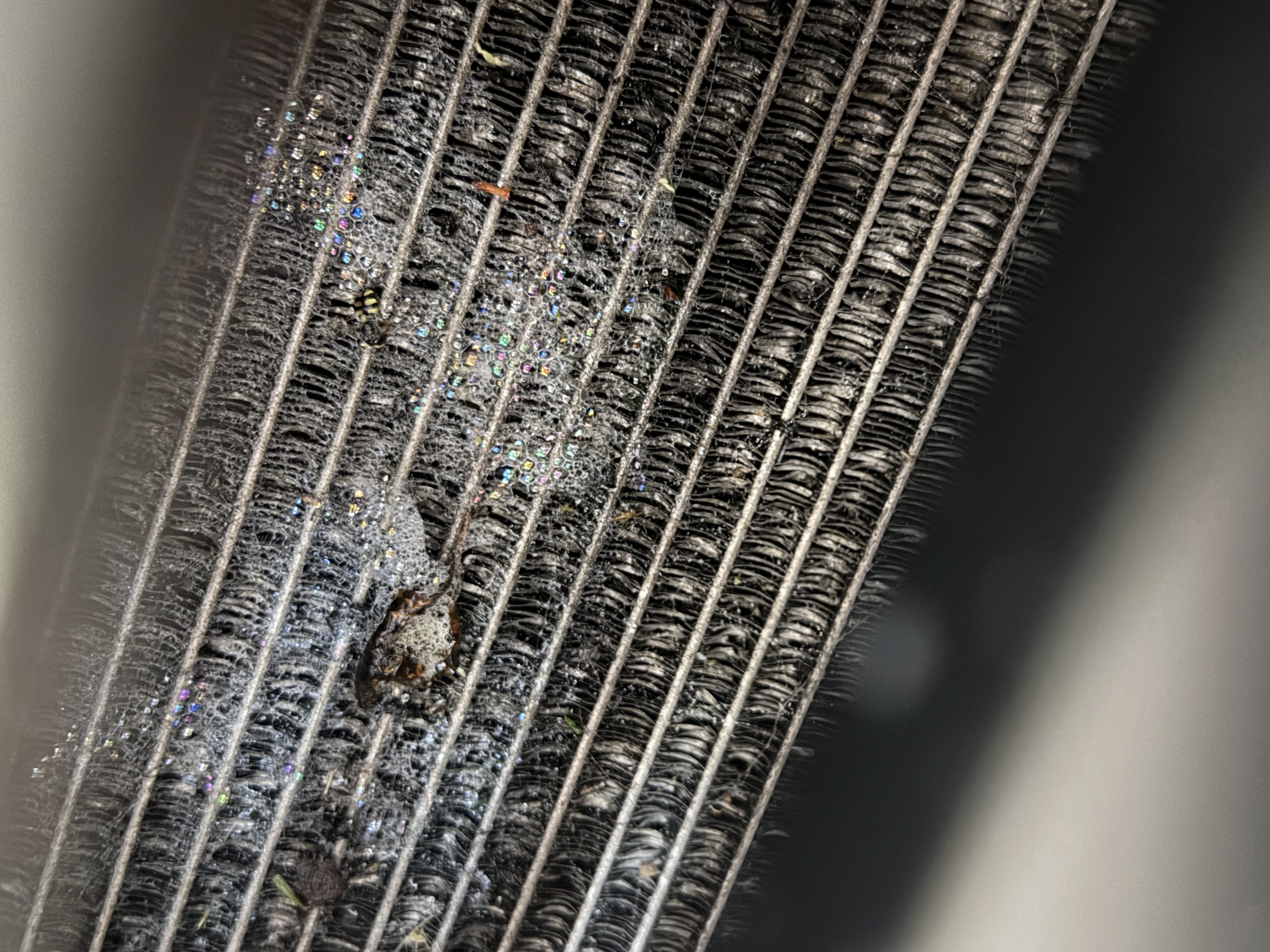
The most common air conditioning complaint at this time of year is simple: the air con is not blowing cold.
The most common assumption about what to do about it is also simple: a regas. But the first question Shaw's asks before adding refrigerant is straightforward: why is it low?
Refrigerant does not evaporate
An air conditioning system is a sealed circuit. Refrigerant circulates through it continuously — compressed, cooled, expanded, warmed, compressed again. Under normal operating conditions, refrigerant is not consumed, burned off or used up. It is not like engine oil that gradually depletes as the engine runs.
If a system is low on refrigerant, it is low because refrigerant has escaped from somewhere. That somewhere is a leak.
In practice, refrigerant does seep very slowly from correctly operating systems over a period of years — particularly through ageing seals and O-rings — and some gradual loss over a long period is considered acceptable. A system that has not been serviced for several years may benefit from a top-up for this reason. But a system that has lost significant refrigerant in a shorter period almost certainly has a more active leak.
Adding refrigerant to a leaking system tops it up temporarily. Without finding and fixing the leak, the refrigerant will continue to escape. The car blows cold for a while — until the level drops again and the same problem returns.
How we check for a leak
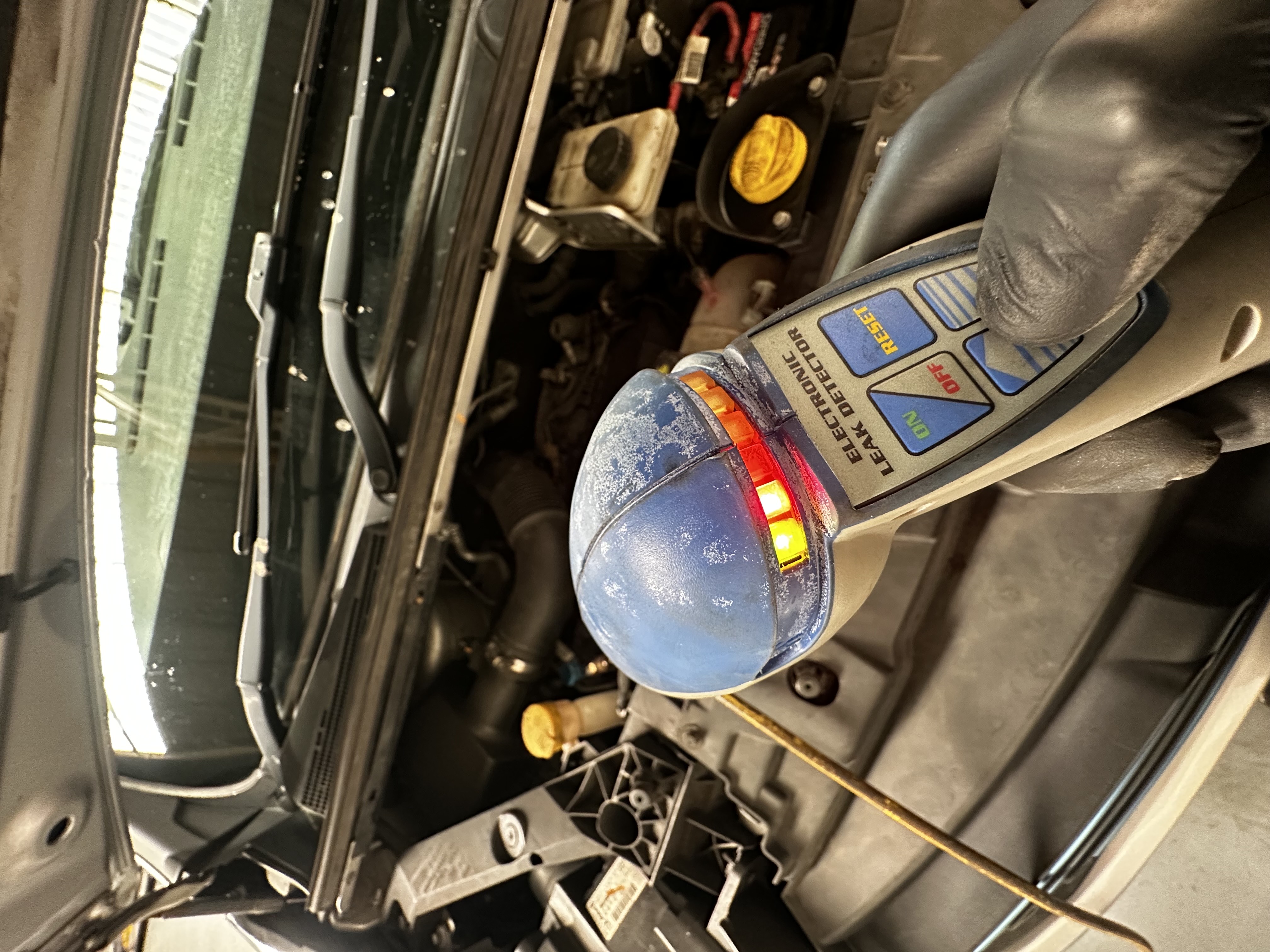
An electronic refrigerant leak detector in use during a vehicle inspection at our workshop. By working around the accessible components of the air conditioning circuit, we can identify whether refrigerant is escaping and broadly where from.
An electronic refrigerant leak detector is sensitive to the presence of refrigerant compounds in the air immediately around it. By working methodically around the accessible components of the air conditioning system — compressor connections, the condenser, refrigerant line joints, the evaporator area — we can establish whether active leakage is occurring and identify the general area.
This is more useful than simply connecting to the service ports and reading the system pressure, which confirms refrigerant is low but does not tell you why or where the refrigerant has gone.
What we commonly find
No significant active leak — if the system is low but no active leak is identified, the refrigerant may have escaped gradually over a long period through normal slow seepage. A regas is appropriate and the system should hold the charge for a reasonable time.
A leaking joint or seal — O-ring seals at refrigerant line connections can perish and allow refrigerant to escape slowly. These are relatively straightforward to address: the joint is opened, the seal replaced, and the system leak-tested and recharged once confirmed.
A leaking condenser — the condenser sits at the front of the vehicle, typically ahead of the radiator, and is exposed to road debris, stone chips and corrosion. A stone-damaged or corroded condenser will leak and needs replacing before a regas makes sense.
An evaporator leak — the evaporator sits inside the cabin, usually behind the dashboard. Accessing it is a more involved job. But regassing a system with an evaporator leak simply delays the same conversation until the gas has escaped again.
Prices
- Leak Check — £50
- R134a regas (older refrigerant, most pre-2017 vehicles) — £95
- R1234yf regas (newer refrigerant, most post-2017 vehicles) — £150
Where a regas is carried out, system pressures are checked before and after to confirm the correct charge. If a leak is identified during the check, the repair is quoted separately before any further work proceeds.
Air conditioning at Shaw's
Air conditioning service is carried out at both our Kinmel Bay and Rhyl branches. October is a sensible point to address any air conditioning concerns — after a full summer of use, and before the dehumidification function that helps with demisting windows in winter becomes useful again.
Find out about air conditioning at Shaw's →
We check it properly.
We explain it properly.
We do the job properly.
You decide what gets done.
Shaw's Service Station
Kinmel Bay & Rhyl
01745 353481