
A Winter Car Check at Shaw’s — What We Inspect Before the Cold Arrives
Cold weather, wet roads and reduced visibility make several parts of your car more relevant than they are in summer. Here is what Shaw’s covers in a winter vehicle inspection.
The months before winter are a good time to check the parts of your car that cold weather, wet roads and reduced visibility make most relevant. Not everything on this list is a legal requirement — but several of them are, and the rest can leave you stranded or in danger when conditions change.
Tyres
The legal minimum tread depth in the UK is 1.6mm across the central three-quarters of the tyre. In wet conditions, tyres below 3mm start to lose stopping performance measurably. In wet winter conditions, the difference between 1.6mm and 3mm of tread can be the difference between stopping in time and not.
We check tread depth across the full contact width of each tyre, not just at the wear indicators. Tyre pressure also drops with temperature: for roughly every 10°C drop, pressure falls around 0.1 bar. If you set your pressures in summer and have not checked them since, they will be lower now.
Battery
Cold weather significantly increases the load on a car battery. A battery that is borderline in summer often fails in November or January — when the engine needs more current to crank, the starter is stiffer, and the battery’s available capacity is reduced by the cold. Battery testing is part of our winter check. We load-test the battery to assess its capacity under realistic conditions, not just whether it can hold a resting voltage.
Coolant and antifreeze
Coolant prevents both freezing and internal corrosion. Over time, the corrosion inhibitors deplete, which affects both protective properties and the pH level inside the system. Antifreeze concentration should protect to at least −25°C for typical UK conditions — we check this with a refractometer as part of the inspection.
Brakes
Brake fluid absorbs moisture over time, which lowers its boiling point and can accelerate corrosion inside the hydraulic system. Most manufacturers recommend brake fluid replacement every two years regardless of mileage. We check fluid condition and brake component condition as part of the winter inspection.
Wiper blades
Wiper blades harden with age and UV exposure. A blade that works adequately in summer often smears or chatters in heavy rain. If your wipers are leaving streaks in dry conditions, they will not improve in the wet.
Air conditioning — for demisting, not just cooling
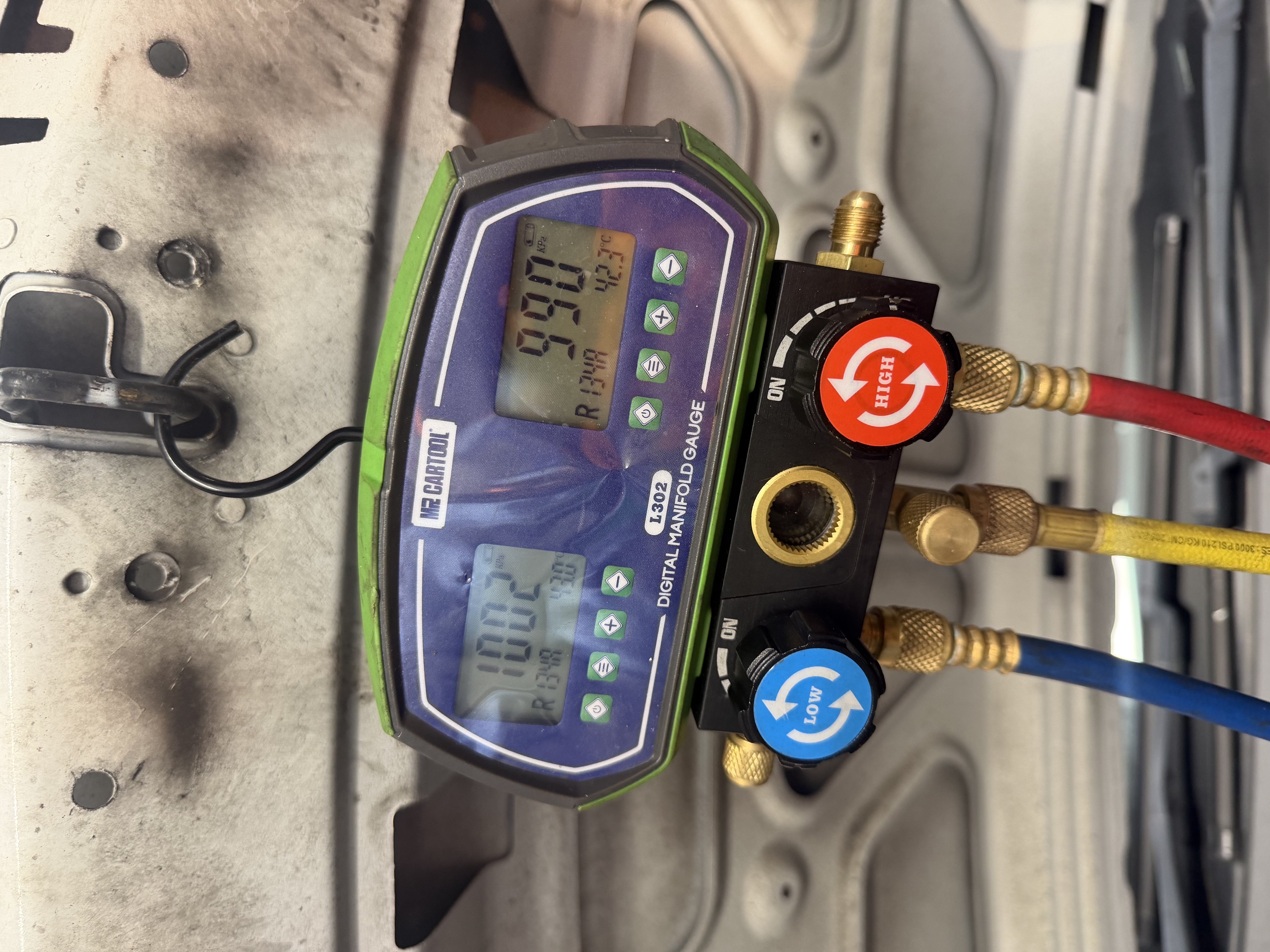
Air conditioning is the most effective way to clear a misted windscreen in winter. The AC system dries the air before it reaches the glass, removing the moisture that causes misting — something the heater alone cannot do as efficiently. If the AC is blowing but not working effectively, it may be low on refrigerant or have a minor leak. Shaw’s carries out AC checks at both branches:
- Leak check: £50
- Recharge (R134a): from £95
- Recharge (R1234yf): from £150
If the AC is not working at all, it is worth fixing before winter rather than waiting until summer when the queue for the same job is longer.
Lights
In winter, your lights are in use for longer. A failed bulb you have not noticed in summer becomes a visibility and legal problem in winter. We check all exterior lights as part of the winter inspection: headlights, indicators, brake lights, fog lights and number plate lights.
Book a winter check at Shaw’s
A winter vehicle inspection covers all of the above and is carried out at both our Kinmel Bay and Rhyl branches. If specific work is required, we confirm what is needed and quote before anything is started.
Book a winter check at Shaw’s →
We check it properly.
We explain it properly.
We do the job properly.
You decide what gets done.
Shaw’s Service Station
Kinmel Bay & Rhyl
01745 353481